
Honda E-Clutch Explained and What the Rollout Means for South African Riders
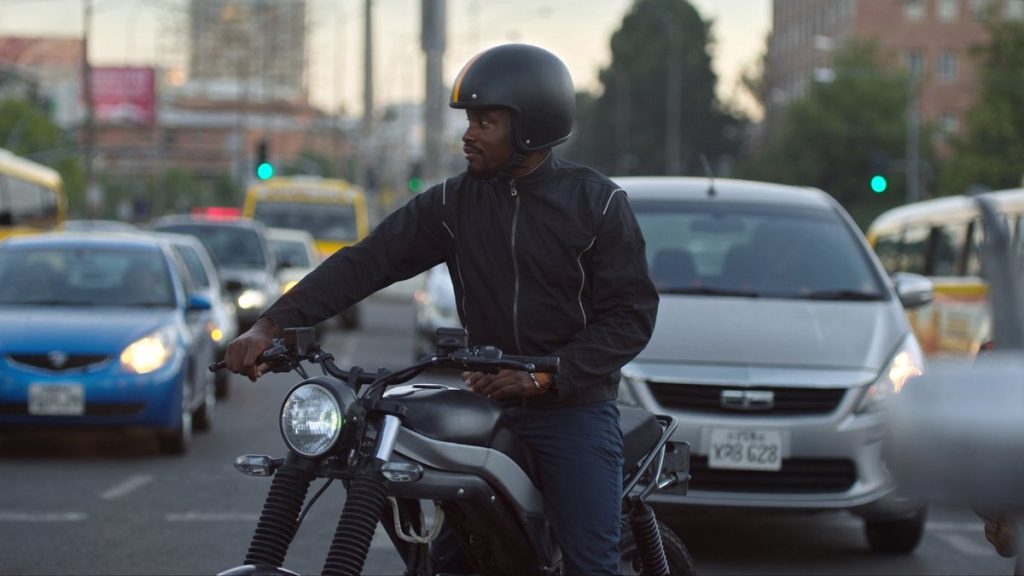
Anyone who rides through Johannesburg or Cape Town at half past four on a weekday knows the problem. You spend forty minutes feathering a clutch lever between stationary cars, your left hand aches by the time you get home, and you stall at the one robot where three taxis are watching. Honda thinks it has an answer, and it is now selling that answer in South Africa.
Honda E-Clutch is an electronically controlled clutch that pulls away, changes gear and stops without you touching the lever. The lever still works if you want it. The gearbox is still a normal six speed box with a foot lever. Nothing about the bike feels alien. That combination is why the technology has spread from two bikes in 2024 to more than a dozen across Honda’s range, and why it now matters to riders shopping for commuter machines under 500cc.
We track the under 500cc market in South Africa every week. Here is what E-Clutch actually does, where the rollout has reached, what it costs locally, and whether it is likely to land on the small commuter bikes most of our readers actually buy. If you already know you want one, the Honda motorbikes for sale on Scooter125 are the place to start.
What Honda E-Clutch actually is
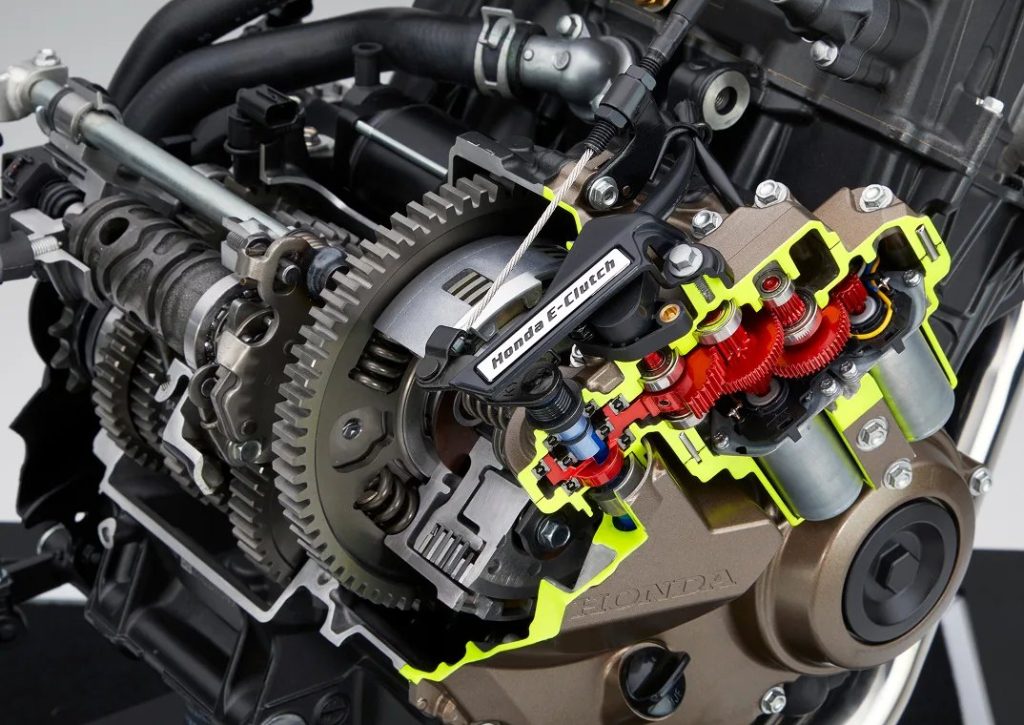
E-Clutch is an assist system bolted onto a conventional motorcycle clutch. Two small electric motors sit in a unit behind the right hand engine cover. They operate the standard clutch through the standard clutch mechanism. Honda says the whole assembly weighs less than four and a half pounds, which works out to roughly 2kg on the kerb weight.
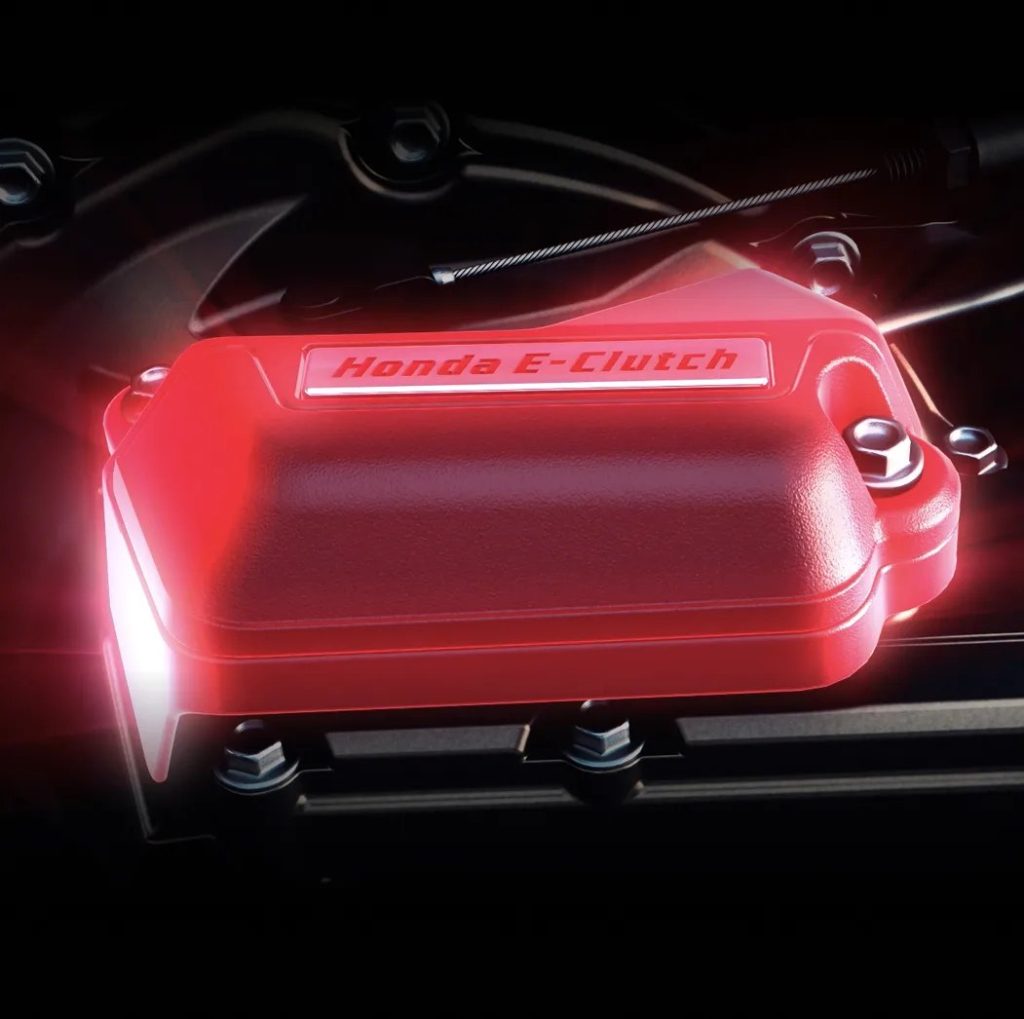
That is the important bit. Honda did not redesign the gearbox. The clutch plates, basket and transmission are the same parts fitted to the manual version of the same bike. Remove the actuator and you have an ordinary motorcycle. This is why Honda has been able to add it to so many models so quickly, and why it costs a fraction of what a fully automatic transmission costs.
You still choose your gears. You still use the foot lever. The system simply handles the clutch for you, every time, faster and more consistently than a human hand can.
How Honda E-Clutch works
The control unit reads eight inputs continuously. Honda lists vehicle speed, throttle position, engine rpm, pressure on the shift pedal, the angle of the clutch motor reduction gear, countershaft speed and the gear currently selected. It then works the clutch while also trimming ignition timing and fuel injection so the shift lands without a jolt.
Three details matter in daily riding.
You can override it instantly. Pull the clutch lever and E-Clutch steps back and lets you ride normally. It reactivates on its own in under a second at higher engine speeds, or after five seconds at lower speeds. Nothing to press, nothing to cancel.
You can switch it off completely. There is a setting in the dash menu. Turn it off and the bike behaves exactly like the manual model until you turn it back on.
You can tune the feel. Honda gives you Hard, Medium and Soft shift settings, set independently for upshifts and downshifts. New riders usually prefer Soft. Riders who want a firmer, more deliberate shift action pick Hard.
There is a learning curve, and it runs in the opposite direction to what you expect. Reviewers who spent time on the NX500 E-Clutch found the system pulls away so smoothly from third or fourth gear that riders forget to shift down at a stop, until the dash starts flashing a downshift prompt at them. Starting in too high a gear repeatedly is not good for clutch life. The other habit to break is blipping the throttle while stationary in gear, because the system reads that as a request to move.
E-Clutch is not DCT and it is not a quickshifter
These three systems get confused constantly in showrooms. They are not the same thing.
| E-Clutch | DCT | Quickshifter | |
|---|---|---|---|
| Clutch lever | Fitted, optional to use | Removed entirely | Fitted, used for pulling away |
| Who picks the gear | You, on the foot lever | You or the bike, on bar buttons | You, on the foot lever |
| Pulling away and stopping | Handled for you | Handled for you | You use the clutch |
| How the shift happens | Motors work a normal clutch | Two clutches, one per gear set | Ignition cut, clutch untouched |
| Added weight | About 2kg | Roughly 10kg | Under 1kg |
| Fitted to | Midsize and small Hondas | Africa Twin, NC750X, Rebel 1100 | Wide range of brands |
The practical difference against a quickshifter is feel. A quickshifter interrupts the ignition to unload the gearbox for a moment. E-Clutch physically operates the clutch, which is why testers consistently describe it as smoother, particularly at low revs and in the lower gears where quickshifters are usually at their worst.
The practical difference against DCT is price and character. DCT is a genuine automatic gearbox and costs accordingly. E-Clutch keeps you in charge of gear selection and adds about 2kg and a modest price premium.
The rollout so far
Honda has moved fast with this one.
2024. E-Clutch debuted on the CB650R and CBR650R. Two bikes, one engine platform, a cautious start.
October 2025. Honda announced the Rebel 300 E-Clutch for 2026. A 286cc single with an automated clutch, aimed openly at beginners, priced from $5,349 in the United States. That was the first real signal that this was not going to stay a midsize technology.
November 2025. At EICMA Honda confirmed E-Clutch for the XL750 Transalp, CB750 Hornet, CB500 Hornet, CBR500R and NX500 as 2026 models, as Visordown reported. Five bikes in one announcement, spanning adventure, naked and sport.
2026. The bikes reached dealers. In the United States Honda listed fifteen on road models for the year with E-Clutch across the range, including the new CB750 Hornet at $7,999. Honda also confirmed the CL250 and Rebel 250 with E-Clutch for markets outside Europe, mostly Asia Pacific. A 250cc single with an automated clutch is no longer a concept. It is on a price list.
What is next. Honda showed CB400 Super Four E-Clutch and CB400R Four E-Clutch concepts at the 2026 Osaka Motorcycle Show, and an American Honda representative has said the company wants the technology on as many bikes as it can put it on. Read that alongside the 250cc production models and the direction is obvious.
Honda E-Clutch in South Africa
Honda South Africa launched E-Clutch locally in July 2026 on two models.
| Model | Engine | E-Clutch price | Manual price | Premium |
|---|---|---|---|---|
| XL750 Transalp E-Clutch | 755cc parallel twin, 67kW | R230,849 | R220,849 | R10,000 |
| NX500 E-Clutch | 471cc parallel twin, 35kW | R141,399 | R131,399 | R10,000 |
Both carry a two year unlimited kilometre warranty and include rider training. Both run a five inch TFT display with Honda RoadSync.
R10,000 is the number to hold onto. That is what Honda South Africa charges for the system on a bike where it is optional, and it is a fair benchmark for what to expect if E-Clutch arrives on cheaper models here.
Junya Ono, Large Project Leader at Honda Motor Co, framed the intent plainly when the local launch was announced. “Our Honda E-Clutch is designed to offer motorcyclists a new kind of experience that can make their riding even more fun and exciting.”
The NX500 is the one worth watching. At 471cc it sits right at the top edge of our market, its 199kg kerb weight is manageable, and it returns a claimed 3.6 litres per 100km. It is the first bike sold in South Africa that puts this technology within reach of a serious commuter rather than an adventure tourer buyer. You can see what else sits in that bracket among the 400cc to 500cc motorbikes listed on the site.
What E-Clutch means if you ride a commuter bike
Three groups stand to gain, and one group should think twice.
Delivery and gig riders. You make hundreds of clutch actions a shift. Removing them removes a real source of hand fatigue and a real source of low speed mistakes. Smoother pull away also means less abuse of the clutch during the hundred small stops a day that a delivery route involves.
First time riders. Stalling is the single most common reason a new rider loses confidence in traffic. E-Clutch removes it. Honda is not shy about this being the point, which is exactly why the Rebel 300 got the system before most of the big bikes did. The counterargument is worth stating honestly. If you learn on an automated clutch and later buy a manual bike, you will have to learn the skill anyway. E-Clutch changes nothing about licensing either: the motorcycle licence codes in South Africa still depend on engine size, not on how the clutch works.
Riders with hand or wrist problems. A heavy clutch pull is a genuine barrier for some riders. This solves it without pushing you into a full automatic or a scooter.
Who should think twice. If you ride mostly open road and enjoy the mechanical involvement, you are paying for something you will switch off. And if your budget is under R60,000, this conversation is theoretical for now. Nothing in that bracket has it.
What to check before you buy
The premium. R10,000 locally. Decide whether the traffic you actually ride in justifies it.
Resale. E-Clutch models are new enough that South African resale data does not exist yet. Our view is that a system aimed at new riders should hold value reasonably on the used market, because it widens the buyer pool rather than narrowing it. Watch this over the next two years rather than assuming it.
Servicing. The clutch and gearbox are standard parts, so routine servicing is unchanged. The actuator is the new component. Ask your dealer directly what it costs out of warranty before you sign.
Your own habits. Book the test ride and spend it in traffic, not on the N1. The system is designed for stop and go riding and that is where you will find out whether you want it.
Will E-Clutch reach 125cc and 150cc commuters
This is the question that matters most for the South African market, where the volume sits between 110cc and 200cc.
The honest answer is not yet, but the trend is pointing that way. Honda has already put E-Clutch on a 250cc single and a 286cc single. The engineering argument for going smaller is strong, because the system is compact, light and reuses standard clutch hardware. The commercial argument is harder, because R10,000 on a R141,399 bike is seven percent and R10,000 on a R35,000 commuter is nearly thirty percent.
What is more likely in the short term is that E-Clutch filters into the 250cc to 400cc learner and commuter class first, in markets where Honda already sells those bikes in volume. South Africa gets those models sporadically. Keep an eye on the CB400 concepts, because a production CB400 with E-Clutch would be the clearest signal yet. Until then the bike most local commuters still end up on is the one in our Honda Ace 125 review, manual clutch and all.
In the meantime, if you want clutch free commuting under 500cc in South Africa today, a scooter is still the answer. What has changed is that scooters are no longer the only answer for riders who want to keep a manual gearbox.
Honda E-Clutch questions answered
Does Honda E-Clutch make the bike an automatic?
No. You still select every gear yourself with the foot lever. The system only operates the clutch. A Honda DCT bike is an automatic. An E-Clutch bike is a manual that handles the clutch for you.
Can you still use the clutch lever on an E-Clutch bike?
Yes. The lever is fitted and fully functional. Pull it and the system steps aside, then it reactivates on its own in under a second at higher revs or after five seconds at low revs. You can also switch E-Clutch off completely in the dash menu.
How much does Honda E-Clutch cost in South Africa?
Honda South Africa charges R10,000 over the manual model. The NX500 E-Clutch is R141,399 against R131,399 for the standard NX500, and the XL750 Transalp E-Clutch is R230,849 against R220,849.
Which Honda models have E-Clutch?
As of the 2026 model year the list includes the CB650R, CBR650R, XL750 Transalp, CB750 Hornet, CB500 Hornet, CBR500R, NX500 and Rebel 300, plus the CL250 and Rebel 250 in selected markets outside Europe. South Africa currently gets the NX500 and XL750 Transalp.
Is Honda E-Clutch the same as a quickshifter?
No. A quickshifter cuts the ignition briefly so the gear can change while the clutch stays engaged. E-Clutch physically operates the clutch with electric motors. That is why it works for pulling away and stopping, which a quickshifter cannot do, and why the shift feels smoother at low speed.
How much weight does E-Clutch add?
About 2kg. Honda quotes the actuator assembly at under four and a half pounds. On the NX500 that takes the kerb weight to 199kg.
Is E-Clutch good for new riders?
It removes stalling, which is the most common early confidence killer in traffic. Honda aims it squarely at new and returning riders, which is why the entry level Rebel 300 received it. The trade off is that you do not build manual clutch skill, so plan for that if you intend to move to a manual bike later.
Related reading: Honda is not the only maker changing how you shift. See what Triumph did with the Tiger 900 Alpine and Desert Editions, which ship with a two-way quickshifter and an Akrapovic silencer as standard.