Honda NC750X Review: The 2025 Update, DCT, Specs and South African Price
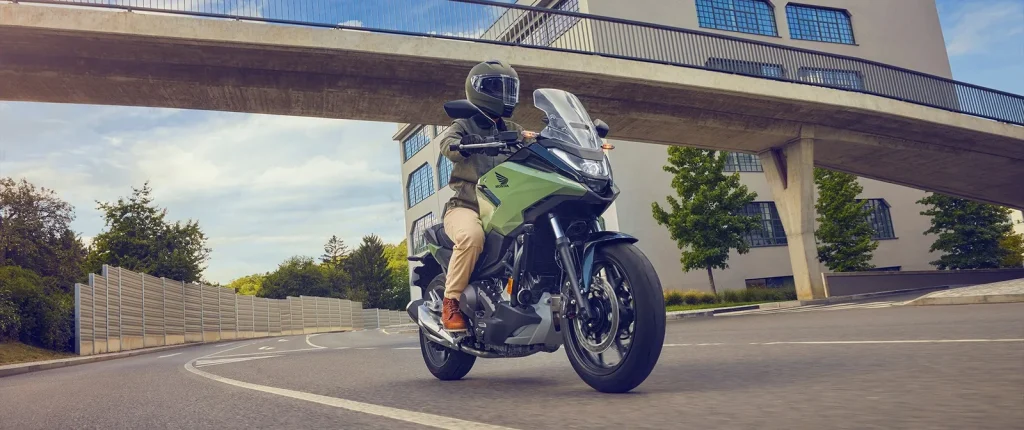
Motorcycle News calls the Honda NC750X the unsung hero of British biking and the most-read bike on its website. Honda calls it the motorcycling world’s Swiss Army knife. Owners call it the best bike they have ever had and then apologise for how boring that sounds. It is a 745cc twin that returns 3.5 litres per 100 km, carries a helmet where the fuel tank should be, and can be had with a gearbox that changes gear for you. It has been doing this since 2012, and the 2025 update, which is the bike Honda South Africa sells for 2026, is the most polished version yet.
Honda South Africa lists it from R153,899 with the manual gearbox, and the dual-clutch version is only about R4,000 more, which makes it one of the cheapest ways into a new 750cc Japanese motorcycle in the country and the cheapest automatic one by a distance. This review covers what the bike is, what changed for 2025, what the testers and the owners found, what it costs to run here and how it stacks up against the NX500, the V-Strom 650 and its own X-ADV sibling.
This is a research based review. Scooter125 has not ridden the 2025 NC750X and the bike was not supplied by Honda or a dealer. Specifications come from Honda South Africa, Honda UK and Honda’s press material. Riding impressions come from Motorcycle News, Bennetts BikeSocial and Visordown, who tested the updated bike, and from sixteen owner reviews of the 2021 to 2025 bikes on Motorcycle News. South African prices are the importers’ list prices at the time of writing. The running cost sums are our own, at the October 2026 fuel price.
What you need to know first
The Honda NC750X is a 745cc, SOHC, 270 degree parallel-twin all-rounder styled as a light adventure bike. It makes 43.1 kW (58 hp) at 6,750 rpm and 69 Nm at 4,750 rpm, weighs 216 kg with the six-speed manual gearbox or 226 kg with the dual-clutch transmission, has an 802 mm seat, a 14.1 litre tank under the seat and a 23 litre lockable compartment where the tank would normally be. Honda claims 3.5 litres per 100 km, which is about 400 km a tank.
For 2025 the bike gained twin 296 mm front discs in place of the old single disc, lighter cast wheels, a smoother dual-clutch gearbox using the Africa Twin’s clutch-control update, a 5 inch TFT dash with phone navigation, new backlit switchgear, a 50 percent brighter LED headlight, reshaped bodywork made partly from plant-based and recycled plastic, and Euro 5+ fuelling. The engine, frame and suspension are unchanged. There is still no cruise control.
Honda South Africa lists the NC750X from R153,899 for the manual, with the DCT at R157,699 on ZA Bikers’ buyers guide, in Fighting Red, Matte Pearl Glare White and Earth Khaki. Motorcycle News rates the 2025 bike four stars and its owners five; Bennetts gave it five out of five and said the DCT has come of age. The criticisms are the same every year: budget suspension that is firm over bad roads, a modest screen, a weak standard headlight on earlier bikes, no cruise control, and a centre stand and USB socket that cost extra.
What the NC750X is

Honda launched the NC700X in 2012 as a new kind of motorcycle for people who wanted transport rather than a hobby: a low-revving twin derived from half of a Honda Jazz car engine, a fuel tank under the seat so that the space between your knees could hold a helmet, and the option of an automatic gearbox. It was cheap, it used almost no fuel and it was impossible to stall. Europe bought it in enormous numbers. It grew to 745cc in 2016, gained traction control in 2019, and was properly updated in 2021 with ride-by-wire, riding modes, LED lights, a lighter frame, shorter suspension and a bigger compartment.
Honda sells the same engine and frame as the X-ADV adventure scooter and the Forza 750 maxi-scooter. The NC750X is the motorcycle version: footpegs, a conventional seat and bars, and the lowest price of the three. MCN’s 2021 verdict was that it is potentially all the bike any of us really need, and its five-star rating has held since.
What changed for 2025
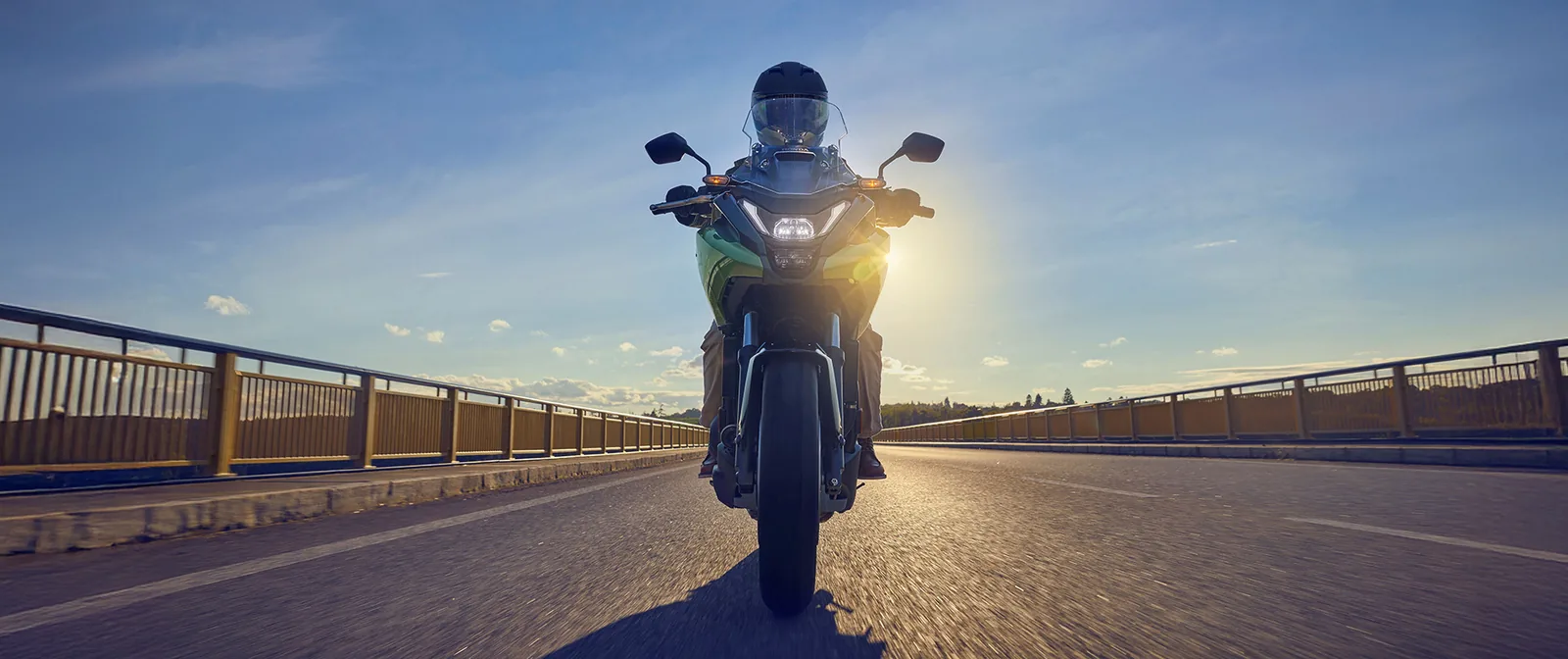
The 2025 update, which is the current bike, is a list of small things that owners asked for.
- Twin 296 mm front discs with two-piston Nissin calipers replace the single 320 mm disc. Every tester and owner calls this the biggest improvement.
- New lighter cast wheels, three spokes in three pairs, save about 1.8 kg.
- The dual-clutch gearbox gets the Africa Twin’s clutch-control algorithm, which estimates clutch oil pressure rather than reading one sensor, plus a dedicated setting for riding under 10 km/h.
- A 5 inch optically bonded TFT dash shared with the Transalp replaces the LCD, with Honda RoadSync for turn-by-turn navigation, calls and music through a headset.
- New switchgear with a backlit joystick.
- A reshaped fairing with an LED headlight Honda says is 50 percent brighter.
- Body panels in Durabio, a plant-derived plastic coloured all the way through so scratches show less, on the khaki and black bikes, and a storage compartment moulded from recycled car bumpers.
- Euro 5+ fuel injection tweaks with no change to output.
The suspension, frame, seat height and engine are as they were. Bennetts summarised it as a useful update at almost the same price.
The 745cc twin
The engine is Honda’s undersquare 745cc SOHC parallel twin, 77 mm bore by 80 mm stroke, 10.7:1 compression, with a 270 degree crank for a V-twin beat and twin balancer shafts. Honda’s engineers built it for torque from very low revs: a long stroke, a high-inertia crank and shaped combustion chambers. The camshaft drives the water pump and a balancer drives the oil pump, which is the kind of packaging that makes it cheap to build and cheap to service.
It makes 43.1 kW at 6,750 rpm and 69 Nm at 4,750 rpm, and that is the whole story: it does not rev, it pulls. MCN said the performance punches well above its weight and the engine bellows deeply through its airbox at full throttle; Bennetts said 58 hp is more than enough for real riding and that Sport mode is like drinking alcopops at a real-ale festival, absolutely wrong but refreshing and funny. The 2021 bike lowered the first three gear ratios for sharper pull-away, and owners describe it as a line-splitting monster in traffic.
Economy is the party trick. Honda claims 3.5 litres per 100 km. Bennetts averaged 4.3 on test. MCN says 4.0 is easy and gentle riding gets into the mid 3s; owners report between 3.5 and 4.0 as a matter of routine and one claims 2.9 on a run. At Highveld altitude a naturally aspirated engine loses roughly 15 percent, which leaves about 37 kW in Gauteng, and the NC750X is one of the few bikes where that genuinely does not matter.
Manual or DCT
The NC750X comes with a conventional six-speed manual or with Honda’s dual-clutch transmission, which is a six-speed gearbox with two automatic clutches, one for the odd gears and one for the even, so the next ratio is engaged before the shift. There is no clutch lever. You choose Drive or Sport on the right switch, or shift yourself with two triggers on the left bar, and the automatic shift points change with the riding mode. DCT adds 10 kg and 10 mm to the wheelbase and, in South Africa, only about R4,000 to the price, a far smaller premium than the R18,000 Honda charges in Britain. MCN says most NC750X buyers choose it.
The 2025 change is the one X-ADV and Africa Twin riders already know: the clutch controller now estimates oil pressure in the clutch chamber and allows for oil temperature, with a separate setting for crawling speeds. Bennetts called the result a big improvement, to the point where the system has finally come of age, and said the Drive mode shift points now match where a rider would change anyway; it barely used manual mode even on twisty roads. MCN found it smooth and perfectly suited to gentle riding. Both still found U-turns a little clumsy compared with a clutch.
Visordown’s criticism is that the shift schedule is tied to the riding mode, so you cannot change the gearbox’s temperament on the move without changing the engine map as well, and that the shift buttons are harder to reach than before. Owners are unanimous that once you have a DCT you would not go back, and one notes that his chain needed adjusting twice in 20,000 km because the gearbox is so smooth. If you have never ridden an automatic motorcycle, this is the one to try, and Honda South Africa includes free rider training with a new bike.
Chassis, suspension and brakes

The frame is a tubular steel diamond type, lightened in 2021, carrying the engine canted forward so that the weight sits low; Honda quotes a 48/52 front-to-rear weight split and a 27 degree rake with 110 mm of trail. The 41 mm Showa fork uses Dual Bending Valve damping and is not adjustable; the Pro-Link shock has preload adjustment only. Travel is 120 mm at each end, shortened in 2021 to make the bike lower and sharper on the road, which is why the seat dropped 30 mm to 802 mm.
That suspension is the bike’s weak point and everyone says so. MCN called the ride a bit firmer than older NCs, enough to notice large bumps. Owners are blunter: one calls the 2024 bike bone-shakingly painful over cobbles and speed bumps and budgeted for a Nitron shock, another says to avoid drain covers and potholes, and a third found the standard suspension saggy by 50,000 km. On South African roads this is the thing to think about. A 2025 owner says the new bike rides much better than his 2024 one did, though Honda lists the suspension as unchanged, so some of that is the lighter wheels and some may be the comfort seat.
The brakes are the good news. The old single front disc was adequate and no more; the 2025 bike’s twin 296 mm discs with two-piston calipers and a 240 mm rear transformed it. MCN found them progressive with lots of feel and an impressive level of power, Bennetts said the second disc makes a big difference and allows hard braking before the ABS steps in, and a long-term owner who had fitted firmer pads and fork internals to his old bike called the new set-up revolutionary. ABS is two-channel. The 17 inch cast wheels wear 120/70 and 160/60 tyres, Dunlop Trailmax or Metzeler Tourance from the factory; owners who replace them with Pirelli Scorpion Trails are happier.
How it rides

MCN’s long-standing verdict is that the NC750X is more fun than its reputation suggests: breezy, agile and well balanced, with ride quality, stability and steering accuracy that belie its steady-away image, and brilliant low-speed agility from a perfectly weighted riding position. The 2025 test added that there is outright fun to be had in corners, especially with the new brakes, and that the Metzelers warm up instantly and grip well. Visordown found it easy and forgiving but composed when pushed hard. Bennetts rode it for two and a half hours at a stretch and called it a flipping good tourer that goes well down twisty back roads.
It is not fast. Owners say overtakes need planning, that there is no point chasing the revs, and that it sits happily at 110 to 130 km/h. MCN quotes a top speed of about 185 km/h. The low seat and low centre of gravity make 226 kg feel smaller than the number, which is the point for the many riders who buy it as a lighter, lower bike to carry on riding into their seventies; one owner traded a Bonneville T120 for exactly that reason.
Off road it is a gravel-car-park bike, in Bennetts’ phrase. The styling is adventure, the 17 inch wheels and 145 mm of clearance are not, and the Trailmax tyres are a hangover from when Honda pitched it as an adventure bike. Dirt roads at sensible speeds are fine. Anything more wants the Transalp.
The storage compartment

The feature that makes the NC an NC. Because the fuel tank sits under the pillion seat, with the filler under a pop-up flap, the space between your knees is a 23 litre lockable compartment with a lid that opens forward. Since 2021 it has been shaped to take an adventure-style helmet with a peak; Bennetts’ Shoei GT-Air 3 would not fit, so try your own lid before you rely on it. It swallows a laptop bag, rain gear, a padlock and the shopping, and owners describe it as the star of the bike. A foam liner kit and a divider are accessories, and so, annoyingly, is the USB socket that fits into a blanked-off hole inside it.
The trade-off is a 14.1 litre tank with a filler that owners say needs patience, because it is easy to splash back. Honda’s claimed consumption still gives about 400 km, and real-world riding about 330.
Electronics and equipment
Ride-by-wire brings three preset modes, Sport, Standard and Rain, plus a User mode where you set the power delivery, engine braking, the three-level traction control and, on the DCT, the shift map. ABS is two-channel. The 5 inch TFT has three layouts with light and dark backgrounds, a gear indicator, outside temperature and fuel gauge, and connects to Honda RoadSync over Bluetooth for navigation, calls and music through a headset. Bennetts could not find a remaining-range display and failed to pair the app three times; the dealer sorts that at handover. The HISS immobiliser is standard.
What you do not get: cruise control, which every tester and most owners list first and which the ride-by-wire throttle makes an odd omission; a centre stand, which is an accessory even though the bike has a chain; the USB socket; an adjustable screen, which is an accessory that owners say is worth having because the standard one is short; and heated grips. Honda sells all of these in Adventure, Comfort, Urban and Travel packs. Budget for the Comfort pack, with the screen, comfort seats and heated grips, and the centre stand.
Seat height and comfort
The seat is 802 mm and the bike is narrow at the waist, so most riders get both feet down; MCN notes it is easier for less confident riders to drop a hoof, and a 1.73 m owner in his seventies calls it comfortable for getting on and off. The riding position is upright with a wide bar and the ergonomics are, in MCN’s words, first class. The standard seat is good for an hour or two; the optional comfort seat is deeper and softer, though one owner prefers the standard one after 30 minutes. Wind protection from the short fixed screen is better than its size suggests, but taller riders get helmet buffeting at 120 km/h and most fit a taller screen.
The pillion seat is large and the bike is smooth with a passenger, which the DCT makes easier still. Vibration is low thanks to the balancers. For a bike built to a price, the comfort is one of the things nobody complains about.
What owners say
Sixteen owners of the 2021-on bike have reviewed it on Motorcycle News and the average is 4.6 out of 5, with reliability at 4.4 and value at 4.7. The most useful review is from a rider of 51 years who kept his 2018 DCT alongside a new 2025 one: the new bike is smoother-shifting, tauter and better finished, the twin discs transformed the stopping, and his 80,000 km 2018 bike passed its last inspection with no advisories and went to his son. He also thinks the new horn and drive-selector buttons are too small to find by feel in gloves, which other owners echo.
Economy comes up in every review: 3.5 to 4.0 litres per 100 km is normal and one owner saw 2.9. The compartment is the star, the DCT is a masterpiece, the engine will outlast the rider. The complaints are suspension on bad roads, the short screen, the standard tyres, the cost of Honda’s accessories, and a first service that one UK dealer priced at the equivalent of R6,500 for an oil change and a look over. One 2025 owner thinks the frame welds and plastics show cost cutting compared with older Hondas; none report a mechanical fault.
Price and availability in South Africa
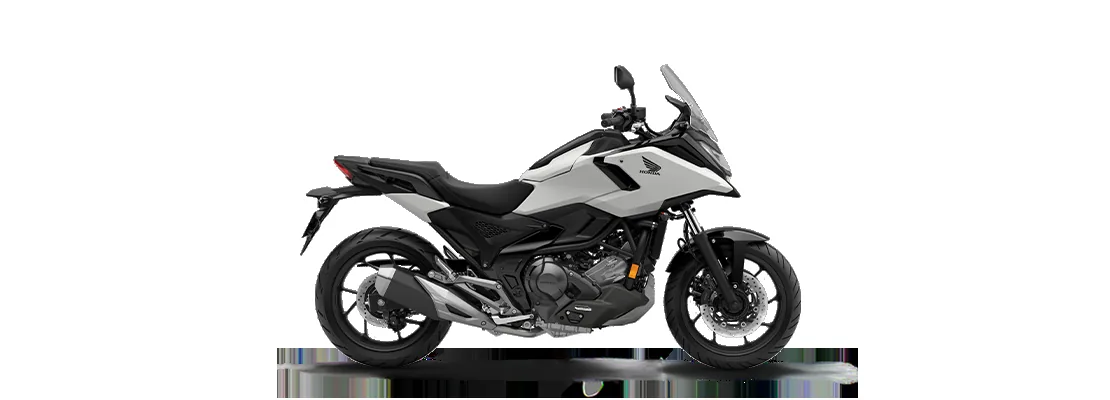
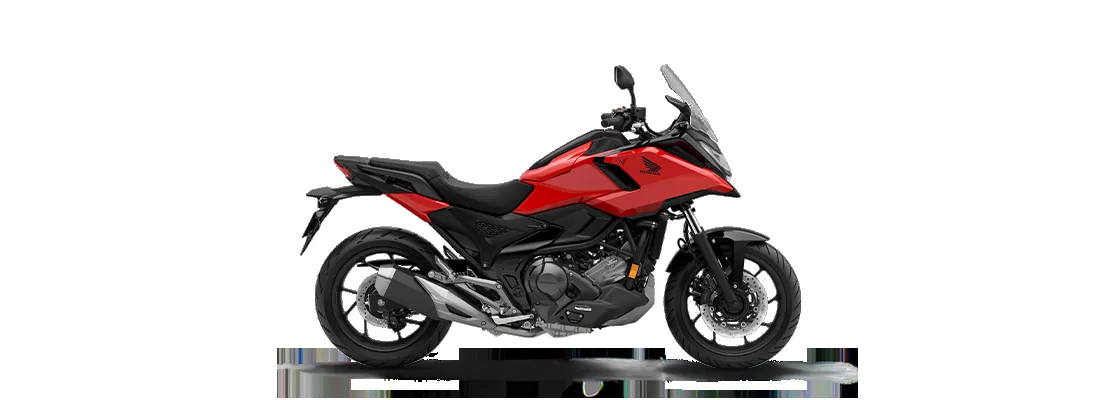

Honda South Africa lists the NC750X from R153,899, and its 2026 spec sheet confirms that is the manual, with both manual and DCT versions available. ZA Bikers’ buyers guide quotes R157,699 for the 2026 DCT, which makes the automatic a R3,800 option here against about R18,000 in Britain. Confirm both figures with the dealer. Honda South Africa’s motorcycles page was offering a R10,000 fuel voucher with the NC750X at the time of writing, and free rider training comes with any new Honda. Colours are Fighting Red, Matte Pearl Glare White and Earth Khaki, the last in the unpainted Durabio plastic.
The NC750X is the least expensive new 750cc Japanese motorcycle on sale in South Africa, and the only automatic one under R200,000.
What it costs to run
Petrol is at a record. The October 2026 adjustment took inland 95 unleaded to about R30 a litre. The NC750X runs on 95 and, with 10.7:1 compression, will tolerate 93 inland; one owner reckons it runs best on higher-octane fuel, which is the owner talking rather than Honda.
Honda claims 3.5 litres per 100 km. Bennetts averaged 4.3, MCN says 4.0 is easy and owners report 3.5 to 4.0. We have used 4.2.
- A full 14.1 litre tank costs about R425.
- Range is roughly 335 km, and gentle riding will see 400.
- Fuel costs about R1.26 a kilometre, the lowest of any 750 we have reviewed.
- A 40 km round-trip commute costs about R50 a day, or roughly R1,110 over 22 working days.
Services are every 12,000 km, the valves every 24,000, and the engine is as simple as a modern twin gets; owners with the DCT report chains that need adjusting a couple of times a year. Tyres are a common 120/70 and 160/60 17 inch pair. Insurance on a R154,000 Honda commuter is modest. The hidden cost is the accessory list: a centre stand, USB socket, taller screen, comfort seat, heated grips and luggage can add R30,000 or more, so price the packs when you price the bike.
Licence requirements in South Africa
South Africa has two motorcycle licence codes. Code A1 covers bikes up to 125cc from age 16. Code A covers everything else from age 18. The NC750X needs a full Code A, and a car licence does not cover it. The DCT makes no difference to the licence; there is no automatic-only code in South Africa.
As a first big bike it is close to ideal. The seat is low, the power is soft and arrives from idle, Rain mode softens it further, the brakes are now strong and the DCT removes stalling from the list of things to worry about. MCN rates it among the easiest bikes to ride at any size. The 226 kg is the only number to respect. Our guide to what a motorbike licence costs in South Africa covers the fees and the tests.
NC750X versus the alternatives
South African prices are the importers’ list prices at the time of writing and change often.
Honda NX500
R141,399 from Honda South Africa with E-Clutch. A 471cc twin with about 35 kW and 196 kg, lighter and R12,500 cheaper, with Honda’s clutchless manual gearbox rather than a full automatic and a proper fuel tank rather than a compartment. It is the better bike for a shorter rider and the worse one for a pillion or a long trip. Read our explainer on Honda E-Clutch.
Suzuki V-Strom 650XT
R166,650 from Suzuki South Africa. The 645cc V-twin makes about 52 kW, it has spoked wheels, a 19 inch front and real dirt-road ability, and it is the closest thing to a rival in spirit. It is R13,000 more, heavier on fuel, manual only and, in MCN’s view, not as refined, agile or frugal.
Honda XL750 Transalp
Listed by Honda South Africa without a price at the time of writing; dealers advertise it from about R214,900, and Honda was offering R20,000 off 2025 stock. The 755cc Hornet engine with 67 kW is the one NC owners wish they had, in a 21 inch-wheeled adventure chassis with E-Clutch as an option. It is the serious adventure bike; the NC is the serious commuter.
Honda X-ADV
Not on Honda South Africa’s current list; our estimate is R200,000 to R215,000 if ordered. The same engine, frame and DCT with a scooter floor, a 22 litre boot under the seat, long-travel suspension and wire wheels. It has cruise control, which the NC does not, and would cost R40,000 to R55,000 more. Read our Honda X-ADV review.
Kawasaki Versys 650 and Yamaha Tracer 7
The Versys is not on Kawasaki South Africa’s current list and the Tracer 7 has never been sold here, so both are dealer-order bikes if they are available at all. Both have more power than the NC, neither has an automatic option, and neither has the compartment.
Start with the Honda adventure bikes for sale on Scooter125, where used NC750X and NX500 models appear regularly.
Full specifications
Figures from Honda South Africa and Honda UK for the 2025 and 2026 NC750X.
| Engine | 745cc liquid-cooled SOHC 8-valve 270-degree parallel twin |
| Bore x stroke | 77 x 80 mm |
| Compression ratio | 10.7:1 |
| Power | 43.1 kW (58 hp) at 6,750 rpm; 35 kW A2 version in Europe |
| Torque | 69 Nm at 4,750 rpm |
| Fuel system | PGM-FI, ride-by-wire, Euro 5+ |
| Gearbox | 6-speed manual, or 6-speed dual-clutch transmission with automatic D and S modes and manual triggers; chain final drive |
| Frame | Tubular steel diamond, Pro-Link aluminium swingarm |
| Front suspension | 41 mm Showa Dual Bending Valve telescopic fork, non-adjustable, 120 mm travel |
| Rear suspension | Pro-Link monoshock, preload adjustable, 120 mm travel |
| Front brakes | Twin 296 mm floating discs, 2-piston Nissin axial calipers, ABS |
| Rear brake | 240 mm wave disc, single-piston caliper, ABS |
| Wheels and tyres | Cast aluminium 17 x 3.5 and 17 x 4.5; 120/70 ZR17 and 160/60 ZR17 |
| Rake and trail | 27 degrees, 110 mm |
| Wheelbase | 1,525 mm manual, 1,535 mm DCT |
| Length x width x height | 2,210 x 846 x 1,330 mm |
| Seat height | 802 mm |
| Ground clearance | 145 mm |
| Kerb weight | 216 kg manual, 226 kg DCT |
| Fuel tank | 14.1 litres, under the seat |
| Claimed consumption | 3.5 litres per 100 km; testers saw about 4.3 |
| Storage | 23 litre lockable compartment in the tank position |
| Electronics | Sport, Standard, Rain and User modes; 3-level HSTC traction control; 2-channel ABS; 5 inch TFT with Honda RoadSync; HISS immobiliser; LED lighting; USB-C optional |
| Top speed | About 185 km/h |
| UK price | £7,599 manual, £8,399 DCT |
| South African price | R153,899 manual (Honda South Africa); R157,699 DCT (ZA Bikers buyers guide) |
Frequently asked questions
How much is the Honda NC750X in South Africa?
Honda South Africa lists the manual from R153,899 and ZA Bikers’ buyers guide shows the DCT at R157,699. Confirm the current figures with a dealer. A R10,000 fuel voucher was on offer at the time of writing.
Is the Honda NC750X automatic?
Both versions are sold here: a six-speed manual, and the DCT dual-clutch automatic with no clutch lever for about R4,000 more.
Where is the fuel tank on the NC750X?
Under the pillion seat, with the filler under a flap. That frees the space where the tank would be for a 23 litre lockable compartment that takes a helmet.
What changed on the 2025 NC750X?
Twin front discs, lighter wheels, a smoother DCT, a 5 inch TFT with phone navigation, new switchgear, a brighter LED headlight, reshaped bodywork partly in plant-based and recycled plastic, and Euro 5+ fuelling. Engine, frame and suspension are unchanged.
How fast is the NC750X?
About 185 km/h. It cruises comfortably at 120 to 130 km/h and makes 43.1 kW, so it is relaxed rather than quick.
What is the fuel consumption of the NC750X?
Honda claims 3.5 litres per 100 km. Testers average about 4.3 and owners report 3.5 to 4.0, which gives 330 to 400 km from the 14.1 litre tank.
What is the seat height of the NC750X?
802 mm, with a narrow waist that makes it feel lower. It is one of the easier big bikes for shorter riders.
Does the NC750X have cruise control?
No, and neither can it be added as a Honda accessory. It is the most common complaint about the bike.
The verdict

The NC750X is the motorcycle for people who have worked out what they actually use a motorcycle for. It commutes on a third of the fuel of anything else its size, carries a helmet and a week’s shopping inside itself, tours two-up at 120 km/h all day, never stalls if you buy the DCT, and will run for 100,000 km on oil changes. The 2025 update gave it the brakes it always needed, a gearbox that no longer hesitates and a dash from this decade, for roughly the same money.
It is not a bike that will make you take the long way home. The engine is a worker, the suspension is built to a price and tells you so on bad roads, the screen is short and the accessory list is long. Honda could fit cruise control tomorrow and has chosen not to.
At R153,899 for the manual and about R157,699 with DCT, it is the cheapest new automatic motorcycle of any size in South Africa and one of the cheapest 750s. If you want a bike to ride every day without thinking about it, buy this one and spend the change on the Comfort pack and a centre stand. If you want excitement, the X-ADV or the Transalp use the same showroom. Either way, the Honda adventure bikes for sale on Scooter125 are the place to start.
Sources referenced
- Honda South Africa, NC750X model page and 2026 specification sheet; motorcycles showroom offers, October 2026
- Honda UK, NC750X specification page, 2025 and 2027 model years
- Honda North America, “2025 Honda NC750X DCT features and benefits” press release
- ZA Bikers buyers guide, Honda NC750X (DCT), October 2026
- Motorcycle News, Michael Neeves, “2025-on Honda NC750X review”, updated 10 December 2025
- Motorcycle News, Mike Armitage, “2021-on Honda NC750X review”, updated 7 February 2025, and sixteen owner reviews to August 2026
- Bennetts BikeSocial, Steve Rose, “Honda NC750X DCT (2025) review”, 2 May 2025
- Visordown, Simon Hancocks, “Honda NC750X (2025) review”, updated 24 January 2025
- Suzuki South Africa dual-purpose price list; Honda South Africa NX500 and Transalp listings
- Department of Mineral and Petroleum Resources, October 2026 fuel price adjustment