Flying Flea C6 Review: Royal Enfield’s Electric Motorcycle, Range, Charging and What It Would Cost in South Africa
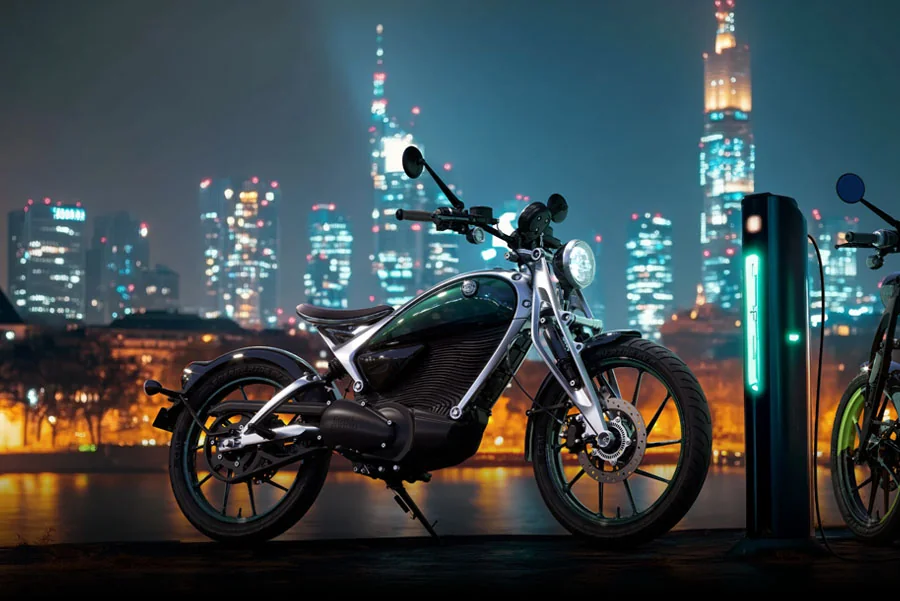
Royal Enfield builds 350cc singles that look like 1955, so the last thing anyone expected from it was the most interesting small electric motorcycle of 2026. The Flying Flea C6 is a 124 kg, 15.4 kW electric bike with a forged aluminium frame, a magnesium battery case, a girder fork, cornering ABS, Google Maps on its dash and a Red Dot design award, sold under a new brand named after the 125cc two-stroke that Royal Enfield dropped out of aeroplanes with British paratroopers in 1942. Visordown’s first reaction, after two days in Paris, was that this is actually really good.
It costs £5,300 in Britain, which is less than a Honda CB125R, and about the same as a Hunter 350 in India. Royal Enfield South Africa has not announced it. This review covers what the bike is, what it does and does not do, what the launch tests in Paris and Chennai found, what Indian owners are saying six months in, what it would cost to charge here, and whether it makes sense against the electric bikes that are already sold in South Africa.
This is a research based review. Scooter125 has not ridden the Flying Flea C6 and the bike was not supplied by Royal Enfield or a dealer. Specifications come from Flying Flea’s Indian product page. Riding impressions come from Visordown and AMCN, who rode it in Paris and Chennai in September 2026, Bennetts BikeSocial’s assessment, and Indian owner and expert reports on BikeWale, BikeDekho and Team-BHP. South African pricing is our estimate and is labelled as such. The running cost sums are our own, at 2026 home electricity tariffs.
What you need to know first
The Flying Flea C6 is a city electric motorcycle from Royal Enfield’s new Flying Flea brand. Its air-cooled permanent-magnet motor makes 15.4 kW peak and 60 Nm, drives the rear wheel through a two-stage belt with no gearbox, and takes the bike from 0 to 60 km/h in 3.7 seconds to a limited 115 km/h. The 3.91 kWh battery is fixed in a finned magnesium case, charges from any household socket through an on-board charger, and gives a claimed 154 km on the Indian test cycle, 104 km on the European urban cycle and 81 km out of town. It weighs 124 kg, the seat is 823 mm, and it runs 19 inch wheels, a girder fork, ByBre brakes with Bosch cornering ABS and lean-sensitive traction control.
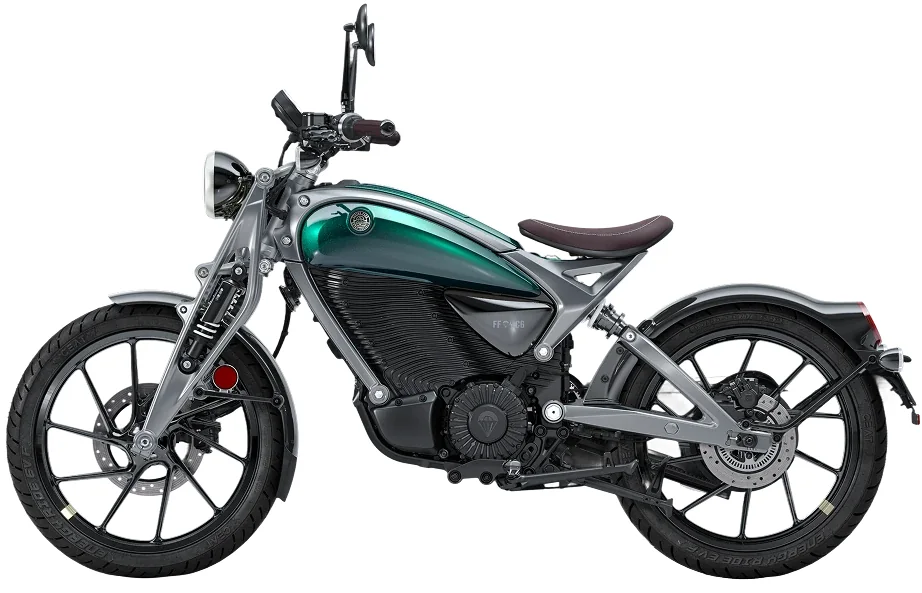
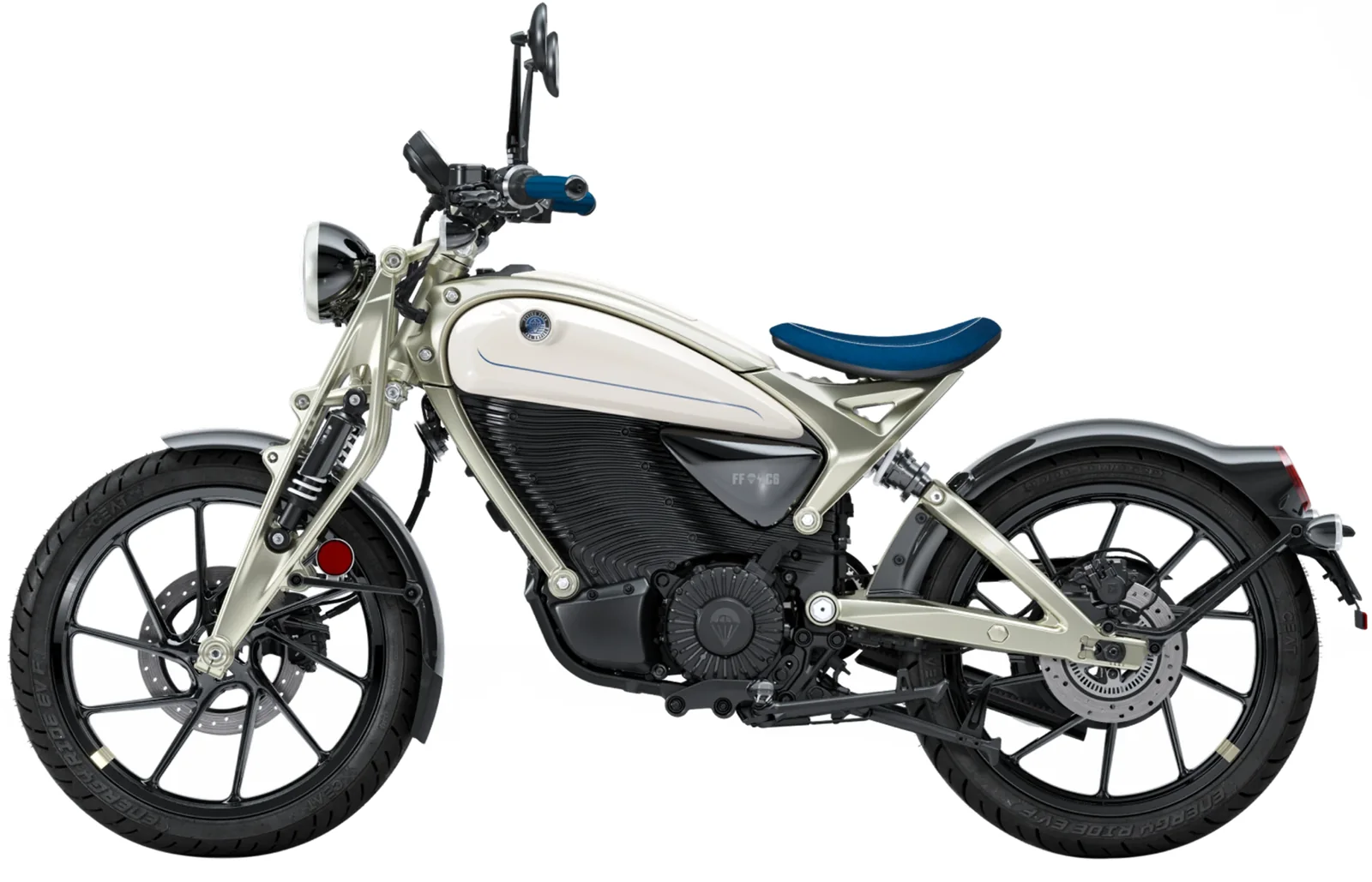
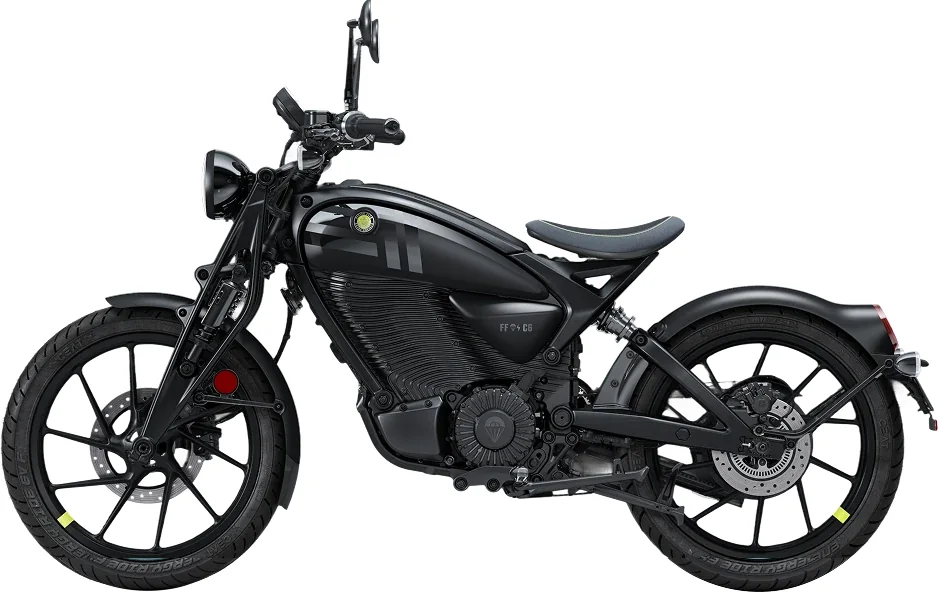
Standard equipment includes five riding modes on a rotary collar, cruise control, hill hold, a crawl mode that moves the bike forwards or backwards at walking pace, an electronic handlebar lock, a 3.5 inch round touchscreen running Royal Enfield’s Fleaware software with built-in Google Maps, a wireless phone charger, a USB-C port, an app with live location and tamper alerts, and over-the-air updates. It launched in India in April 2026 at ₹2,79,000, reached London, Paris, Barcelona, Berlin and Rome from September at £5,300 or €5,990, and comes in Flea Green, Storm Black and Parachute White.
Visordown said Royal Enfield has hit the sweet spot for lightweight electric motorcycles. AMCN’s Alan Cathcart called it a potential breakthrough bike. Bennetts said the design and materials are a clear step ahead of most cheap electrics. The criticisms are consistent: a hard, slippery seat that hurts after an hour, fiddly switchgear and a mode collar that changes modes by accident, a fixed battery with no fast charging, belt noise, and a real-world range of 60 to 100 km depending on how it is ridden.
What the Flying Flea is
In 1942 Royal Enfield built the WD/RE, a 125cc two-stroke that weighed 56 kg and was dropped by parachute in a steel cradle alongside airborne troops so they had transport when they landed. The soldiers called it the Flying Flea. Royal Enfield’s electric programme borrowed the name, the mission and, loosely, the shape: a skeletal frame, a round headlight, a short seat and a rubber-band-style front suspension reimagined as a forged aluminium girder. Drawings date from 2018, the bike was shown at EICMA in November 2024, and it won a Red Dot design award before anyone had ridden it.
Flying Flea is a separate brand with its own stores, starting in Bengaluru and Hyderabad, and a scrambler version called the S6 to follow. Royal Enfield’s stated intent is a bike for people who have never ridden a motorcycle, built to the standard of the ones who have. The C6 is a city bike with a motorway top speed and the range of a long commute, not a tourer, and every review, including the company’s own, says so.
Motor and battery
The motor is an air-cooled permanent-magnet synchronous unit with an integrated controller, making 15.4 kW at peak and 60 Nm from a standstill. The continuous rating has not been published; Indian reports put it around 8 kW, which is the number that would matter for a licence class in Europe. Drive is through a two-stage belt with a single ratio, so there is no clutch, no gearbox and nothing to shift. Royal Enfield claims 0 to 60 km/h in 3.7 seconds and BikeDekho measured 0 to 80 in under six; the limiter is at 115 km/h and both Visordown and AMCN saw 114 on the dash.
The battery is a 3.91 kWh lithium-ion pack at about 102 volts, housed in a cast magnesium case with cooling fins that doubles as the structural centre of the bike. It is air-cooled and it is fixed: there is no swappable or removable pack, which Bennetts called the one real hurdle for riders without off-street parking. The pack is what the frame bolts to and what gives the bike its finned, engine-like silhouette.
AMCN described Sport mode’s acceleration as verging on thrilling. Visordown found the power instant and the bike still pulling strongly at 70 km/h, with a reluctance to go past the limiter that is the limiter rather than the motor. One advantage worth stating plainly for South African buyers: an electric motor loses nothing at altitude, so the C6 makes the same 15.4 kW in Johannesburg as in Durban, which no petrol 125 can say.
Charging: the part that matters
The C6 charges through an on-board charger from any single-phase socket between 100 and 270 volts at up to 16 amps, using a locking cable with a computer-style C13 connector at the bike end and a three-pin plug at the wall. Flying Flea quotes about one percent a minute: 20 to 80 percent in 65 minutes, empty to full in 2 hours 16 minutes. Three charging modes let you trickle it overnight in about six hours, which is gentlest on the battery, take about three hours at a medium rate, or use the fastest setting. There is no DC fast charging and no public-charger connector.
In practice that means the bike lives wherever you can run a lead. Visordown measured the supplied cable at 10 metres from a three-pin plug, which covers a driveway or a garage and not much else. Indian owners on Team-BHP describe the routine as plugging in a cable that looks like a PC power lead. For a Johannesburg townhouse with a garage or a carport socket it is trivial; for a flat with street parking it is the end of the conversation, as Bennetts pointed out.
Load shedding is the South African wrinkle, as it was for the Honda WN7. A bike that charges in two hours at home is less exposed than one that needs a fast charger mid-trip, and at under 4 kWh a full charge is within reach of a modest inverter. On a bad day the plan still has to allow for it.
Real-world range
Royal Enfield claims 154 km on the Indian driving cycle. The European figures are more useful: 104 km on the WMTC urban cycle and 81 km extra-urban, which Visordown found its battery monitor and trip distances supported over two days in and around Paris. AMCN called real-world range the big question. Indian owners answer it: BikeWale’s owner-reported average is 142 km, one user reports 86 km in economy mode, and BikeDekho’s experts saw range drop to 60 or 70 km under spirited riding.
The honest planning figure for South Africa is 80 to 100 km of mixed riding at the speeds the bike is comfortable at, and 60 if you use Sport mode on the freeway. That is a day of city riding, a Sandton to Pretoria commute and back with margin, or a Cape Town to Stellenbosch run one way. Regenerative braking, triggered by rolling the throttle backwards past its closed position, puts a little back and is adjustable by mode; AMCN found Sport’s regen so strong it made flowing corners harder.
The girder fork, frame and brakes
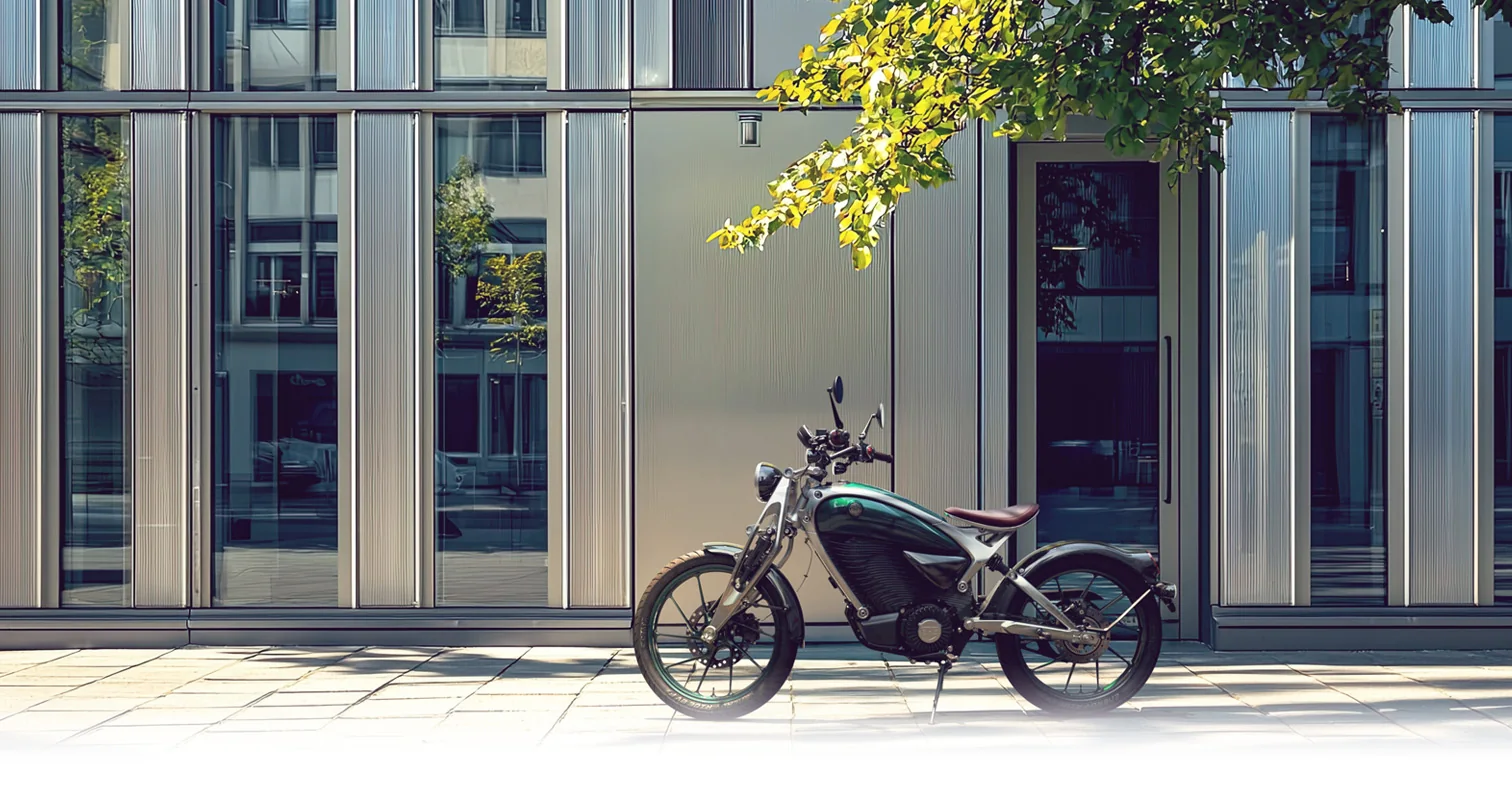
The frame is forged aluminium, bolted around the magnesium battery case, with a forged aluminium swingarm and an aluminium bash plate under the motor. The front suspension is the Flying Flea’s signature: a forged aluminium girder, the first on a production motorcycle in decades, with two coil-over hydraulic shocks working through a lower wishbone and a mudguard that articulates with the wheel. Royal Enfield has a patent application on it. Travel is 100 mm at the front and 110 mm at the rear through a direct-acting monoshock with an internal floating piston. The wheelbase is a short 1,366 mm and ground clearance is 207 mm.
The testers were surprised by how well it works. AMCN found the suspension absorbed Paris cobbles and Chennai potholes without drama and the bike stayed stable in fast corners despite its skinny 90/90-19 Ceat tyres. Visordown praised the light, responsive steering and said it could ride the C6 hard on twisty roads without the bike feeling nervous. BikeWale’s experts found the rear monoshock slightly firm, which is the one dissent.
Brakes are by ByBre, Brembo’s Indian subsidiary: a 260 mm front disc with a two-piston caliper and a 220 mm rear with a single piston, both operated from the handlebar in the scooter layout, with Bosch lean-sensitive ABS in three sensitivity settings and a switchable rear. AMCN found the front strong enough on its own and the rear sharp, best kept for emergencies; Visordown called the set-up powerful and direct and noted some lever feedback when regen and the mechanical brake overlap. Cornering ABS on a bike at this price surprised everyone.
How it rides
Visordown’s Simon Hancocks rode it for two days around Paris, from cobbles to the Périphérique, and said the bike was most enjoyable away from the city, where it could be ridden hard on twisty roads. His reaction on the first day was the quote that will follow the bike: bloody hell, this is actually really good. AMCN’s Alan Cathcart rode it in Chennai and then for 120 km through the French countryside past Versailles and found it light, very nimble, direct and precise, with power delivery he rated as among the best-mapped he had tried.
At 124 kg the C6 weighs less than a Honda CB125R and a good deal less than any 350cc Royal Enfield, and every tester mentioned how unintimidating that makes it for the new riders it is aimed at. The downsides on the move are small and specific: belt noise from the two-stage drive that AMCN found louder than other electric bikes, a rear brake lever on the bar that takes petrol riders a few minutes to relearn, and switchgear, especially the indicator and the rotary mode collar, that several reviewers found fiddly and easy to knock by accident.
Electronics, the dash and the app
The dash is a round 3.5 inch colour touchscreen running Fleaware, Royal Enfield’s own software, driven by a joystick on the bar. It carries Google Maps navigation that takes the charge level into account when it suggests where to stop, phone pairing for calls and messages, voice assistance, and over-the-air updates. AMCN found it easy to read in bright sun. Five modes, City, Highway, Sport, Rain and a Custom mode with deep adjustment of power, regen and intervention, are selected on the rotary collar.
Rider aids run to lean-sensitive ABS and traction control, cruise control, hill hold, the bidirectional crawl mode for parking, an electronic handlebar lock in place of a key, and a Share My Status and Location button with a remote tip-over alert. The app shows live location, live charging status, battery state and tamper alerts. A covered tray above the battery holds a phone on a 15 watt wireless charging pad, with a 27 watt USB-C port alongside. Bennetts’ summary was that the technology is well thought out and integrated; BikeDekho’s was that the switch buttons are cramped and hard to reach on the move.
Seat height and comfort
The seat is 823 mm, which Bennetts called tall for a city bike, though the bike is narrow and light enough that it matters less than the number suggests. The riding position is upright on a wide, high bar with low pegs that adjust fore and aft, and AMCN found it roomy; Visordown found it compact, with limited seat-to-bar distance, and thought larger riders would feel restricted.
The seat itself is the one complaint every tester and owner shares. It is a short, sculpted solo pad that AMCN called hard and too slippery, so the rider slides forward under braking, that Visordown found uncomfortable after a couple of hours, and that BikeDekho said hurt after 15 to 20 km. Royal Enfield sells a more generous comfort seat, and a pillion seat and pegs are an accessory. On a bike with an 80 km range the standard seat is a choice rather than an oversight, but it is the first thing to budget for.
What Indian owners say
The C6 has been on sale in India since April 2026, so the owners there are six months ahead of everyone else. BikeWale’s user rating is 3.3 out of 5 from twenty owners, with the praise going to the design, the acceleration and the build, and the complaints going to range and value. A Bengaluru test rider on Team-BHP bought it for the futuristic look, noted that the Flea Green bike has a gloss-finished frame where the black is matte, found the crawl mode and hill hold useful, and reported his dealer had taken 60 to 65 bookings in ten days with six-week delivery.
BikeDekho’s experts rate the build quality and finish among the best on any Royal Enfield and call the bike a premium indulgence rather than an everyday commuter, which is a fair description of a ₹2.79 lakh electric with an 80 km range in a market where a Hunter 350 costs ₹1.5 lakh. Royal Enfield offers a battery-as-a-service plan in India that cuts the purchase price to ₹1.99 lakh in exchange for a monthly fee; nothing of the kind has been announced for Europe.
Price and availability in South Africa
Royal Enfield South Africa’s website lists the full petrol range, from the Hunter 350 at R80,900 to the 650s, and makes no mention of Flying Flea. The brand’s own rollout is India first, then five European capitals, with the United States site live but priceless. South Africa is not on any published list. Royal Enfield has a real dealer network here, which is the one thing most electric motorcycle brands cannot say, so if the Flying Flea comes it will have somewhere to be serviced.
For an estimate, the British price of £5,300 is about R116,000 at current exchange rates, and the Indian price of ₹2,79,000 scaled by the ratio between the Hunter 350’s Indian and South African prices comes to about R150,000. Our estimate is R120,000 to R150,000 if Royal Enfield South Africa lists it, and we will update this page when it does.
Colours are Flea Green with a gloss aluminium frame and brown seat, Storm Black with a matte frame and grey seat, and Parachute White with a blue seat and blue grips.
What it would cost to run
The sums are different from a petrol bike, so here they are in full. The battery holds 3.91 kWh. Home electricity in South Africa’s metros costs roughly R3.50 to R4.50 per kWh in 2026 depending on the municipality and tariff block. At R4 per kWh and a realistic 90 km per charge:
- A full charge from empty costs about R16, and about R10 from 20 percent, which is where you will usually plug in.
- Energy costs about R0.17 a kilometre, against about R1.05 for a Hunter 350 at R30 a litre.
- A 40 km round-trip commute costs about R7 a day, or roughly R150 over 22 working days. The same commute on the Hunter is about R920.
- There is no public fast charging to pay for, because the bike cannot use it.
There is no oil, filter, chain, clutch or spark plug. The belt, tyres, brake pads and the electronics still need attention, and Royal Enfield has not published a service schedule or price outside India. Tyres are 90/90-19s, cheap and plentiful. Insurance will be priced on a replacement cost that is high for a bike this size. The unknowns are the ones every electric vehicle carries: battery life over ten years, and what the bike will be worth second-hand when the battery cannot be swapped.
Licence requirements in South Africa
South Africa’s licence codes are written for engine capacity, not power. Code A1 covers bikes up to 125cc from age 16, and Code A covers everything else from age 18. An electric motorcycle has no capacity, and there is no kilowatt-based class here, so the C6 should be treated as a Code A bike; confirm with your licensing department before you rely on an A1. Our guide to what a motorbike licence costs in South Africa covers the fees and the tests.
As a bike to learn on it is close to ideal: 124 kg, no clutch, no gears, no stalling, a Rain mode, cornering ABS and traction control, hill hold and a crawl mode for parking. Royal Enfield built it for people who have never ridden, and the only thing a new rider has to learn is which lever is the rear brake.
Flying Flea C6 versus the alternatives
South African prices are the importers’ list prices at the time of writing and change often. The Flying Flea figure is our estimate.
Vmoto TC Max and CPX Pro
R81,500 and R112,900 from Vmoto South Africa, with up to 25 percent off at the time of writing. The TC Max is a retro-styled electric motorcycle with a 95 km/h top speed and 92 km of range; the CPX Pro is a maxi-scooter with two batteries, 105 km/h and about 100 km. Both have removable batteries, which the Flying Flea does not, and neither has its chassis, electronics or finish.
BMW CE 02
R162,900 from BMW Motorrad South Africa. A 6 kW, 132 kg urban electric with a 750 mm seat and BMW’s dealer network. It is slower and shorter-legged than the C6 and would cost more on our estimate, but it is here now.
BMW CE 04
R298,550. The electric maxi-scooter with 31 kW, real motorway pace and weather protection, at twice the Flying Flea’s likely price. Read our notes on the Honda WN7 for the state of electric motorcycles in South Africa.
Royal Enfield Hunter 350
R80,900 from Royal Enfield South Africa. The petrol bike that shares a showroom. More range, a fuel stop measured in minutes, a dealer in every city, and roughly six times the running cost per kilometre. For most South African buyers it is still the rational choice, which is the Flying Flea’s problem everywhere.
Kawasaki W230
Not yet sold here either; our estimate is R95,000 to R105,000. A 143 kg petrol retro single with 18 PS, and the closest thing in spirit to the Flying Flea on the petrol side. Read our Kawasaki W230 review.
Start with the commuter bikes for sale on Scooter125, where the Hunter and its rivals appear, and the electric bikes listing, which is empty at the moment and will tell you when that changes.
Full specifications
Figures from Flying Flea’s Indian product page. European range figures from Bennetts and Visordown.
| Motor | Air-cooled permanent-magnet synchronous motor with integrated controller |
| Power | 15.4 kW peak; continuous rating not published |
| Torque | 60 Nm |
| Drive | Two-stage belt, single ratio, no clutch |
| Battery | 3.91 kWh lithium-ion, 101.9 V nominal, air-cooled magnesium alloy case, fixed |
| Charging | On-board charger, 100 to 270 V AC at up to 16 A, locking C13 cable; 20 to 80 percent in 65 minutes, 0 to 100 in 2 hours 16 minutes; three charging modes; no DC fast charging |
| Range | 154 km Indian driving cycle; 104 km WMTC urban, 81 km extra-urban |
| Performance | 0 to 60 km/h in 3.7 seconds; 115 km/h limited |
| Frame | Forged aluminium around the battery case, forged aluminium swingarm |
| Front suspension | Forged aluminium girder with twin hydraulic coil-over shocks, 100 mm travel |
| Rear suspension | Direct-acting monoshock with internal floating piston, 110 mm travel |
| Brakes | ByBre 260 mm front disc with 2-piston caliper, 220 mm rear with single piston; Bosch lean-sensitive ABS with 3 settings and switchable rear; regenerative braking |
| Wheels and tyres | 19 inch cast; Ceat 90/90-19 tubeless front and rear |
| Wheelbase | 1,366 mm |
| Length x width x height | 2,089 x 831 x 1,122 mm |
| Seat height | 823 mm |
| Ground clearance | 207 mm |
| Kerb weight | 124 kg |
| Electronics | City, Highway, Sport, Rain and Custom modes on a rotary collar; lean-sensitive traction control; cruise control; hill hold; crawl mode; electronic handlebar lock; 3.5 inch round touchscreen with Google Maps and Fleaware OS; app with live location, charge status and tamper alert; 15 W wireless and 27 W USB-C charging; over-the-air updates |
| Colours | Flea Green, Storm Black, Parachute White |
| Indian price | ₹2,79,000 ex-showroom; ₹1,99,000 with battery subscription |
| UK and EU price | £5,300; €5,990 |
| South African price | Not announced; our estimate R120,000 to R150,000 |
Frequently asked questions
How much is the Flying Flea C6 in South Africa?
Royal Enfield South Africa has not announced it. It costs £5,300 in Britain, €5,990 in Europe and ₹2,79,000 in India, which points to roughly R120,000 to R150,000 here. That is our estimate.
What is the range of the Flying Flea C6?
154 km on the Indian cycle, 104 km urban and 81 km extra-urban on the European cycle. Owners report 60 to 140 km depending on mode and speed; 80 to 100 km of mixed riding is a safe planning figure.
How long does the Flying Flea C6 take to charge?
About 65 minutes from 20 to 80 percent and 2 hours 16 minutes from empty on a household socket, using the on-board charger. It cannot use DC fast chargers and the battery is not removable.
How fast is the Flying Flea C6?
Limited to 115 km/h, with 0 to 60 km/h in 3.7 seconds. Testers saw 114 km/h on the dash.
Is the Flying Flea C6 a Royal Enfield?
Yes. Flying Flea is Royal Enfield’s electric brand, named after the 125cc WD/RE that was parachuted with British troops in 1942. The C6 is its first model; a scrambler called the S6 follows.
What is the seat height of the Flying Flea C6?
823 mm, on a bike that weighs 124 kg and is narrow, so it feels lower than the number.
Does the Flying Flea C6 have gears?
No. It drives the rear wheel through a two-stage belt with a single ratio and no clutch. Both brakes are on the handlebar.
What licence do you need for the Flying Flea C6 in South Africa?
South African codes are based on engine capacity and have no electric class, so treat it as a Code A bike and confirm with your licensing department.
The verdict
The Flying Flea C6 is the first small electric motorcycle that reads as a motorcycle first and an appliance second. The frame, the girder, the magnesium case and the finish are a level above anything at the price; the electronics are from a bike costing three times as much; it rides, by the account of everyone who has ridden it, like a light, precise, properly developed machine; and it is quick enough to be fun. Royal Enfield spent eight years on it and it shows.
The limits are the limits of a 3.91 kWh battery that does not come out: 80 to 100 km of real range, two hours on a household socket with no fast-charge option, and a bike that can only live somewhere with a plug. Add the seat, which everyone replaces, and the switchgear, which everyone curses. None of those is a reason not to buy it if your riding fits inside them. All of them are reasons not to buy it if it does not.
South Africa is not on the map yet. If Royal Enfield brings it here at our estimate, it is the electric motorcycle we would send a new rider to first, ahead of anything currently on sale. Until then the commuter bikes for sale on Scooter125 are the place to look, and we will update this review the day a rand price appears.
Sources referenced
- Flying Flea, C6 product page (India): specifications, price and brand history; Flying Flea US site
- Bennetts BikeSocial, Ben Purvis, “Royal Enfield Flying Flea C6 (2027) review”, 22 September 2026
- Visordown, Simon Hancocks, “Royal Enfield Flying Flea C6 (2026) review and road test”, updated 1 October 2026
- AMCN, Alan Cathcart, “First ride: Royal Enfield Flying Flea C6”, 23 September 2026
- BikeWale and BikeDekho, Flying Flea C6 model pages: Indian pricing, expert and owner ratings
- Team-BHP, “I test rode the Royal Enfield Flying Flea C6: my impressions”, 18 April 2026
- Royal Enfield South Africa model listing; Vmoto South Africa price list; ZA Bikers buyers guide for the BMW CE 02 and CE 04
- Municipal electricity tariffs, 2026