Honda CB1000F (2026) Review, Specs and What It Means for South Africa
Most retro bikes are a modern naked in a costume. The Honda CB1000F is different, and that is why it is worth a long look. Honda took the CB1000 Hornet, kept the frame and the Fireblade-derived engine, and then changed how the engine breathes, how it is geared and how the bike carries its weight, all so that it would feel like the CB750F and CB900F it is styled after. The result makes 91 kW, weighs 214 kg, costs £10,599 in Britain and has just had its first proper road tests.
Here is what the CB1000F is, what the testers found, what it would cost to run in rand, and where it would sit if Honda brings it to South Africa.
This is a research based review. Scooter125 has not ridden the CB1000F and the bike was not supplied by Honda or a dealer. Specifications come from Honda, and the riding impressions from road tests by Visordown and Bennetts BikeSocial in August 2026, with further context from TopSpeed. The running cost sums are our own at the August 2026 fuel price. Honda South Africa has not announced the CB1000F or a price for it, so every rand figure for the bike itself is an estimate until a dealer gives you one in writing.
What you need to know first
The CB1000F is a 1,000cc liquid-cooled inline-four making 91 kW (122 hp) at 9,000 rpm and 103 Nm at 8,000 rpm. It weighs 214 kg ready to ride, the seat is 795 mm from the ground and the steel tank holds 16 litres. Top speed is 230 km/h.
Behind the round headlight it is thoroughly modern. A six-axis inertial unit runs cornering ABS and lean-sensitive traction control, there are five riding modes, a 5 inch TFT with phone connectivity, keyless ignition and full LED lighting. There is no cruise control, and a quickshifter is an accessory rather than standard.
It is on sale in Britain at £10,599 and in the United States at $10,599. Honda South Africa does not list it. The closest relative in local showrooms is the CB1000GT, the touring bike on the same platform, which Honda South Africa is launching at R315,000.
Where it comes from
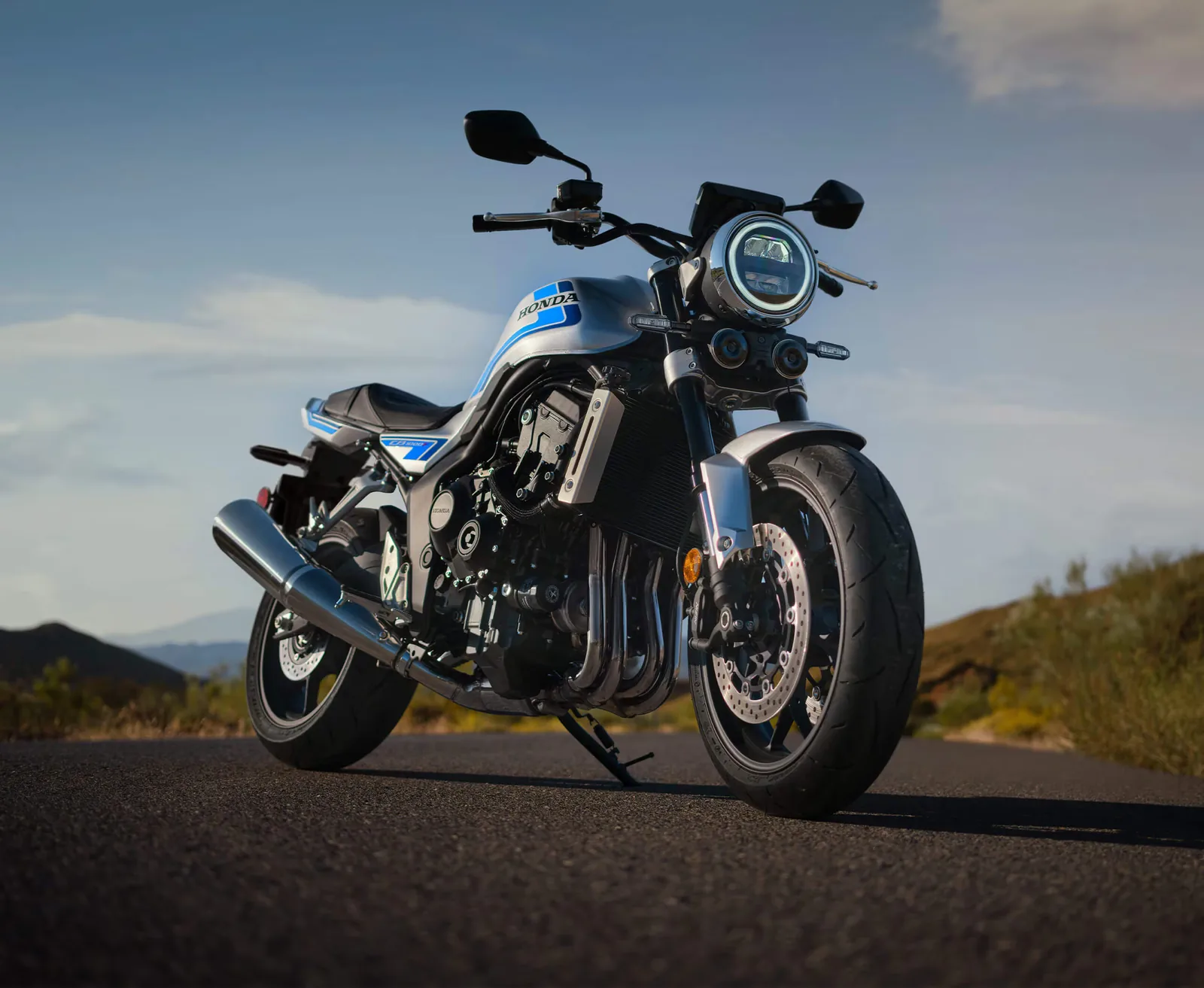
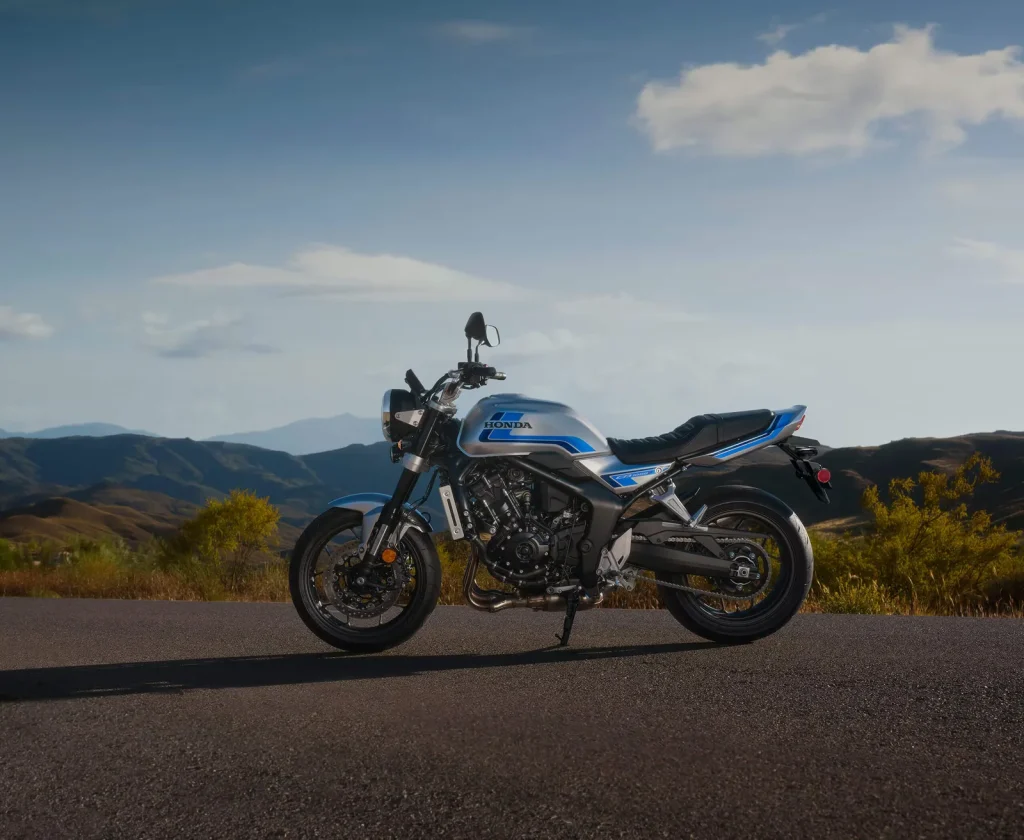
In the late 1970s Honda launched the CB750F and CB900F, twin-cam fours with a tank, side panels and tail that ran together in one unbroken line. Freddie Spencer raced a silver and blue one in American Superbike in the early 1980s, and that bike is why the CB1000F comes in Wolf Silver Metallic with blue stripes. It is the only colour offered in the United States. Britain also gets a silver bike with grey and black graphics, and a black one with red stripes.
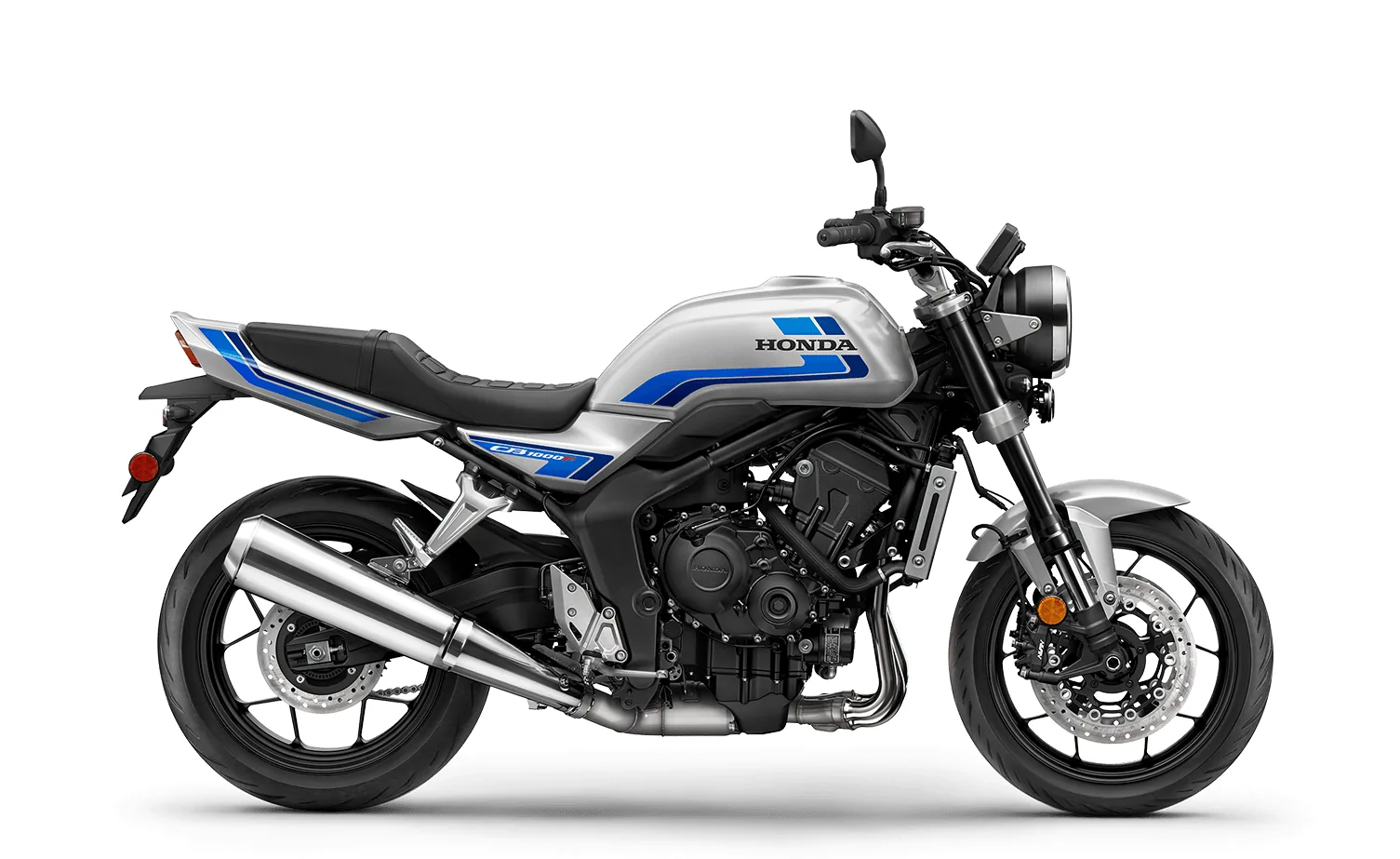
The styling is faithful without being fake. The tank is steel, the seat is long and flat, the silencer is a single megaphone. Honda did not add imitation cooling fins to the liquid-cooled engine, which one tester put down to expediency and which most buyers will see as honesty.
The engine Honda detuned on purpose

The engine is the 2017 Fireblade unit that the CB1000 Hornet uses, where it makes about 112 kW. In the CB1000F it makes 91 kW. That is deliberate, and what Honda did to get there is the most interesting engineering on the bike.
The intake trumpets are different lengths, 40 mm on two cylinders and 50 mm on the other two, and the intake tract is longer than the Hornet’s. The intake cam timing is staggered between the two pairs of cylinders by about five degrees. None of that makes more power. It makes the cylinders fill unevenly, which gives the engine an irregular pulse at idle and a hard-edged bark when you open it, the way a bank of slightly out-of-tune carburettors used to. Bennetts’ Simon Hargreaves said it sounded like a misfire at tickover, then called it one of the most memorable engines he had ridden all year. He also warned that some riders may never take to it.
The gearing is changed too. First and second are lower than the Hornet’s for a harder launch, and third, fourth and fifth are taller for relaxed cruising. In the default Standard mode the throttle map is tuned to feel like a carburetted bike. Visordown’s Simon Hancocks found the response very direct, with a little on-and-off snatch in town if you use Sport mode.
At Highveld altitude a naturally aspirated engine gives up roughly 15 percent, so in Johannesburg this is a 77 kW bike. On a machine with this much midrange that is a non-issue. It will still out-accelerate almost everything on the road.
Chassis, brakes and how it rides
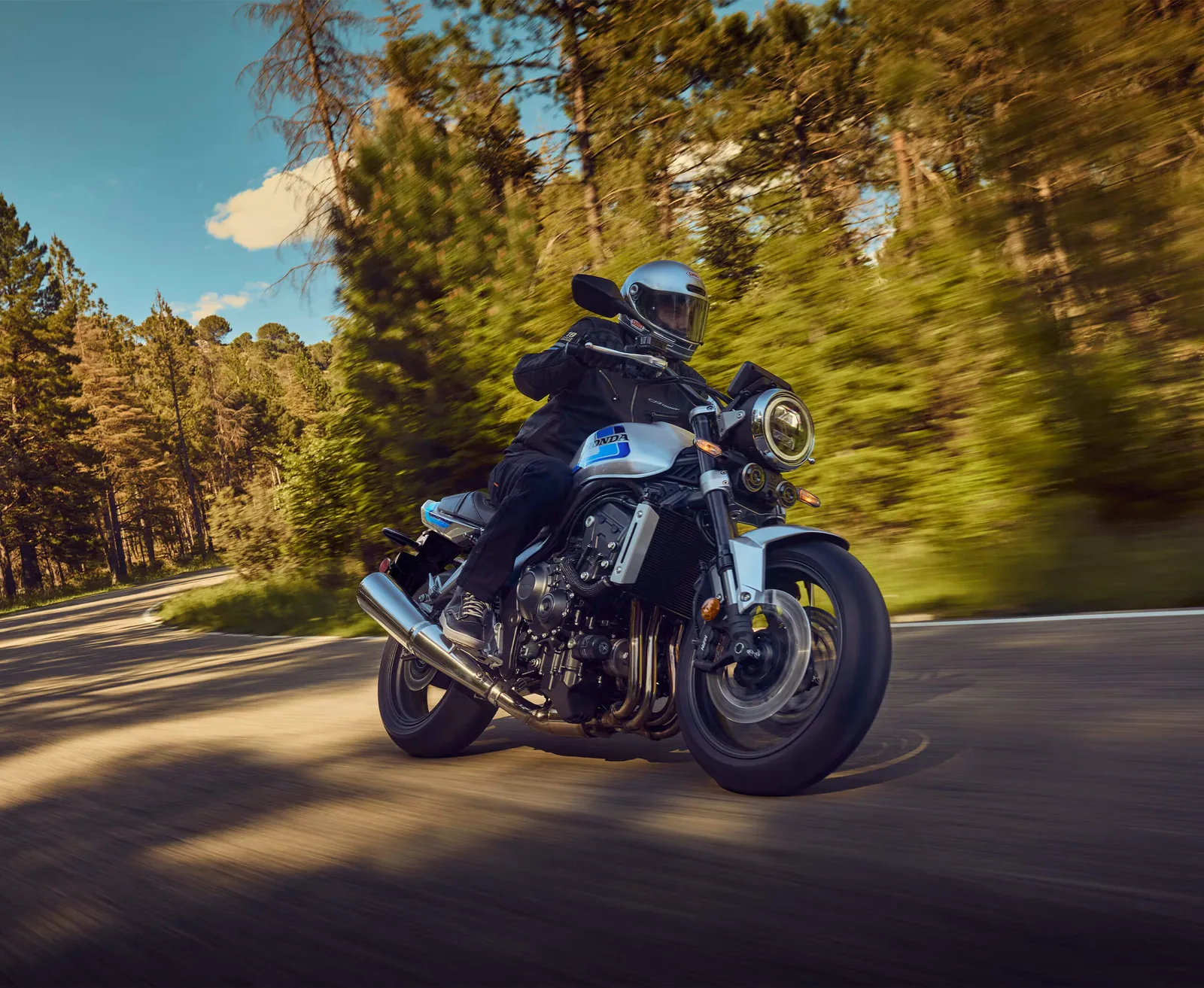
The frame is the Hornet’s steel diamond, with a 1,455 mm wheelbase, 25 degrees of rake and 98 mm of trail. The fork is a 41 mm Showa SFF-BP upside-down unit with 130 mm of travel, adjustable for preload, compression and rebound. The rear is a Showa shock on a Pro-Link linkage with 140 mm of travel and preload and rebound adjustment.
Both road tests said the same thing about how it rides: it is soft, and it is meant to be. Hancocks wrote that it “slithers under power, squirms on the brakes” and lifts its nose when you drive out of a corner. Hargreaves described a slightly loose, vague front end on turn-in compared with the Hornet, because the riding position and steel tank put more weight over the rear, and said he enjoyed the “playful, wayward feel”. Neither called it a flaw. Both said a well-ridden middleweight naked would leave it behind on a track.
For South African roads that softness is an advantage. The CB1000F soaks up patched and broken tar that would have a stiffly sprung super naked skipping. The fork is fully adjustable if you want it firmer.
Brakes are Nissin radial four-piston calipers on twin 310 mm floating discs, with a 240 mm rear, and cornering ABS that works when the bike is leaned over. Visordown called them “super strong”. Tyres are 120/70ZR17 and 180/55ZR17, the most common sport sizes there are, so replacements are easy to find and competitively priced.

The electronics are a step up from the standard Hornet. The inertial unit feeds traction control, wheelie control, rear-lift control and engine braking control, each adjustable. There are three preset modes, Standard, Sport and Rain, and two you can set up yourself.
Seat height, comfort and equipment
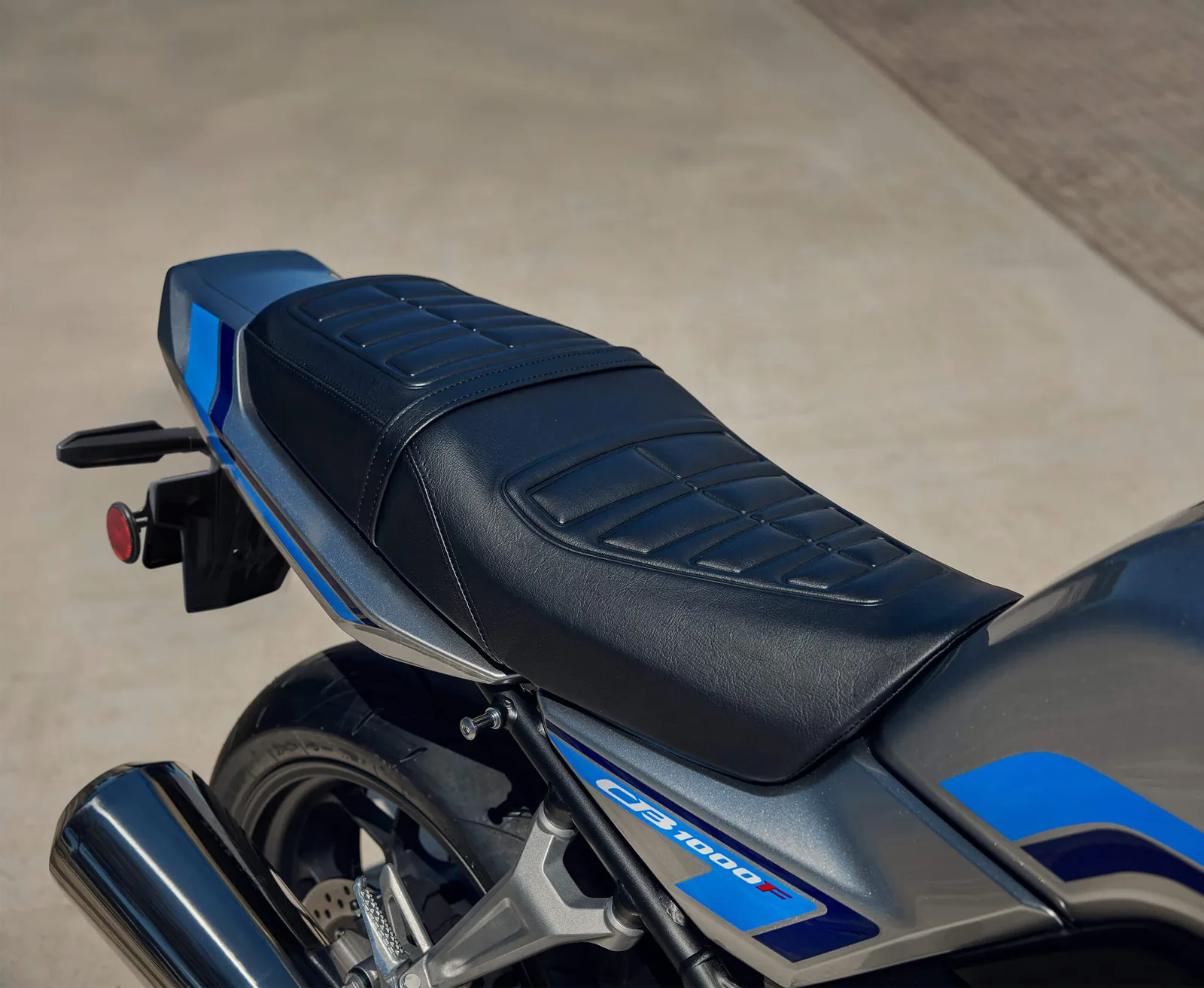
This is where the CB1000F wins people over. The seat is wide, flat and 795 mm high, the bars are 835 mm wide and the pegs are low, so you sit upright with room to move. Visordown called it “extremely comfortable”. Bennetts called the riding position old-school spacious. A 1.70 m rider gets both feet down easily. An accessory comfort seat raises it to 825 mm for taller riders.
The complaints are few and consistent. There is a fine vibration through the pegs and bars at speed. With no fairing, the wind is on your chest from about 130 km/h. The switchgear for the TFT is small and fiddly. And there is no cruise control, which Bennetts called a basic omission on a litre bike in 2026. There is also no E-Clutch or DCT option, although Honda offers its self-operating clutch on smaller models.
In Britain Honda sells three accessory packs: a Sport pack with a nose cone and quickshifter, a Comfort pack with the taller seat and heated grips, and a Travel pack with soft panniers. Bennetts noted a slight weave at very high speed with the nose cone fitted.
Will it come to South Africa, and at what price?
Nothing is confirmed. Honda South Africa’s site does not list the CB1000F, and no local launch has been announced. There is reason to expect it: the CB1000GT on the same platform is arriving at R315,000, so the engine, frame and parts supply will be here.
On price, the overseas position is the guide. At £10,599 the CB1000F undercuts the Kawasaki Z900RS by £1,100 and the BMW R 12 nineT by nearly £4,000 in Britain. It is the cheapest big retro on sale there, and it is far cheaper than the GT. If Honda South Africa priced it with the same relationship to the pound as its other models, it would land somewhere between R240,000 and R270,000. That is our estimate, not Honda’s, and we will update this article if a local price is announced.
What it would cost to run in South Africa
Nobody buys a 1,000cc four to save petrol, but it is worth knowing the numbers. Inland 95 unleaded is R26.17 a litre in August 2026, and with 11.7 to 1 compression this engine wants 95.
Honda claims 5.6 litres per 100 km. Bennetts measured 6.7 over a brisk test ride. Call it 6.0 in mixed use.
- A full 16 litre tank costs about R420.
- Range is roughly 265 km in mixed riding, and nearer 240 km ridden hard.
- Fuel costs about R1.57 a kilometre.
- A 40 km round-trip commute costs about R63 a day, or roughly R1,380 over 22 working days.
A small hatchback at 7.5 litres per 100 km costs about R1.96 a kilometre, so the saving over a car is modest. The bigger running costs are tyres and insurance. A 180-section sport rear lasts 6,000 to 8,000 km on a bike with this much torque, and a litre-class naked is rated accordingly by insurers, so get a quote before you sign. On the other side of the ledger, the engine has been in production since 2017 and is lightly stressed in this tune.
Licence requirements in South Africa
South Africa has two motorcycle licence codes. Code A1 covers bikes up to 125cc from age 16. Code A covers everything else from age 18. The CB1000F needs a full Code A, and a car licence does not cover it. Riding on the wrong code voids your insurance.
There is no power limit on a new Code A here, so nothing in law stops a first-time rider buying one. It would be a poor first bike all the same: 91 kW and 214 kg punish mistakes. Our guide to what a motorbike licence costs in South Africa covers the fees and the tests, and if you are new to riding, the commuter bikes for sale are a better place to start.
CB1000F versus the alternatives
Kawasaki Z900RS
The bike that owns this class. The Z900RS has 948cc, about 82 kW, 215 kg and the best-judged retro styling of the last decade. In Britain it costs £11,699, which is £1,100 more than the Honda for less power and fewer electronics. The Kawasaki is the prettier object. The Honda is the faster, better-equipped and cheaper one.
BMW R 12 nineT
A different kind of retro: an air and oil-cooled boxer twin with about 80 kW, shaft drive and a premium finish, at £14,420 in Britain. It has more character at low revs and far less at the top. BMW has the strongest dealer network of any premium brand in South Africa, and the BMW naked bikes for sale on Scooter125 show what the used ones cost.
Yamaha XSR900
Priced identically to the Honda in the United States, the XSR900 is an 890cc triple with about 87 kW and around 11 kg less to carry. It is sharper and more modern to ride, and less convincing as a retro. If you want the handling of a current naked with a round headlight, this is it. If you want the bike to feel like the era it looks like, the Honda does that better.
Honda CB1000 Hornet
The same platform with 21 kW more, a harder edge and sharper steering, and usually less money. It is the better sports bike. Both British testers still preferred the CB1000F, and Bennetts called it the best version of the CB1000 platform, because the retuned engine is more engaging at road speeds.
Whatever you choose, look at what the naked bikes for sale and used bikes for sale on Scooter125 are going for first. A two-year-old litre naked often costs half what a new one does.
Full specifications
| Specification | Detail |
|---|---|
| Engine | 1,000cc, inline four, DOHC, 16 valves, liquid cooled |
| Bore and stroke | 76.0 mm by 55.1 mm |
| Compression ratio | 11.7 to 1 |
| Power | 91 kW (122 hp) at 9,000 rpm |
| Torque | 103 Nm at 8,000 rpm |
| Fuel system | PGM-FI fuel injection, ride-by-wire |
| Transmission | 6 speed, assist and slipper clutch, chain drive |
| Frame | Steel diamond |
| Front suspension | 41 mm Showa SFF-BP upside-down fork, 130 mm travel, fully adjustable |
| Rear suspension | Showa shock, Pro-Link, 140 mm travel, preload and rebound adjustable |
| Front brakes | Twin 310 mm floating discs, Nissin radial 4-piston calipers, cornering ABS |
| Rear brake | 240 mm disc, Nissin single-piston caliper, cornering ABS |
| Tyres | 120/70ZR17 front, 180/55ZR17 rear |
| Rider aids | Six-axis IMU, cornering ABS, lean-sensitive traction control, wheelie control, rear-lift control, engine brake control, five riding modes |
| Instruments | 5 inch TFT, Honda RoadSync, USB-C, keyless ignition |
| Lighting | Full LED |
| Length, width, height | 2,135 mm, 835 mm, 1,125 mm |
| Wheelbase | 1,455 mm |
| Rake and trail | 25 degrees, 98 mm |
| Ground clearance | 135 mm |
| Seat height | 795 mm |
| Kerb weight | 214 kg |
| Fuel capacity | 16 litres |
| Claimed consumption | 5.6 litres per 100 km |
| Top speed | 230 km/h |
| Overseas price | £10,599 (United Kingdom), $10,599 (United States) |
| South African price | Not announced |
Frequently asked questions
Is the Honda CB1000F available in South Africa?
Not yet. It is on sale in Britain and the United States, but Honda South Africa does not list it and has made no announcement. The CB1000GT on the same platform is launching here, which makes the CB1000F a realistic candidate.
How much would the CB1000F cost in South Africa?
There is no official price. Working from the British price of £10,599 and how Honda South Africa prices its other models, we estimate R240,000 to R270,000. Treat that as a guide only.
How much power does the CB1000F make?
91 kW, which is 122 hp, at 9,000 rpm, with 103 Nm at 8,000 rpm. That is about 21 kW less than the CB1000 Hornet it is based on, because Honda retuned the engine for midrange and character.
Is the CB1000F a good first bike?
No. It is friendly for a litre bike, with a low seat and good electronics, but 91 kW and 214 kg are too much for a new rider. Start on something smaller and come back to it.
Does the CB1000F have cruise control or a quickshifter?
There is no cruise control. A quickshifter is available as an accessory, on its own or as part of the Sport pack in Britain.
What is the difference between the CB1000F and the CB1000 Hornet?
Same frame and base engine. The CB1000F has retro styling, a steel tank, a more upright riding position, a retuned engine with less peak power and more midrange, different gearing, softer suspension settings and cornering ABS.
What fuel does it use and how far will it go?
It needs 95 unleaded. At about 6.0 litres per 100 km the 16 litre tank gives roughly 265 km.
The verdict
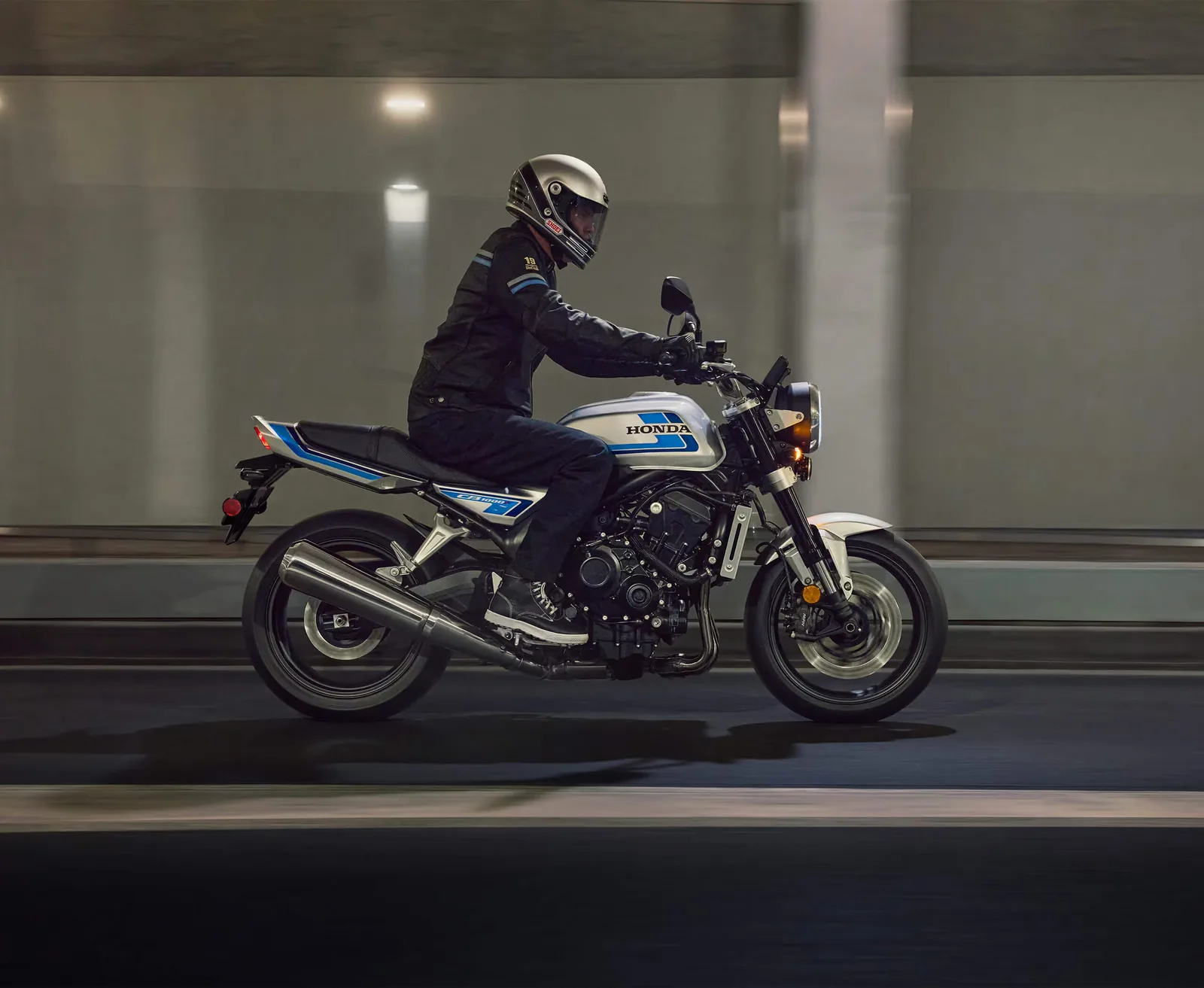
The CB1000F is the rare retro that goes deeper than the paint. Honda gave up power on purpose to make the engine sound and respond like the bikes it honours, softened the chassis so it moves around like they did, and then put a full set of modern electronics underneath to keep it all safe. Both British testers came away liking it more than the faster Hornet it is built on.
It is not for everyone. If you want the sharpest, quickest litre naked, this is not it, and the engine’s gruff character will put some riders off. There is no cruise control, and the wind will find you on a long highway run.
For a rider who grew up wanting a CB900F, or who simply wants a comfortable, fast, good-looking bike that feels alive at legal speeds, it is the most convincing thing in the class, and overseas it is also the cheapest. Whether it is the right buy here depends on a price Honda South Africa has not yet named. Until it does, ask your Honda dealer to register your interest, and see what the Honda motorbikes for sale on Scooter125 and the current motorbike specials look like.
Sources referenced
- Honda Powersports (United States), 2026 CB1000F model page, pricing and features
- Visordown, Simon Hancocks, “Honda CB1000F (2026) Review”, 20 August 2026
- Bennetts BikeSocial, Simon Hargreaves and Ben Purvis, “Honda CB1000F (2026) Review”, August 2026
- TopSpeed, “The Motorcycle That Quietly Defines Modern Classic Motorcycling”
- Honda South Africa, motorcycle range and CB1000GT launch pricing
- Department of Mineral and Petroleum Resources, August 2026 fuel price adjustment